
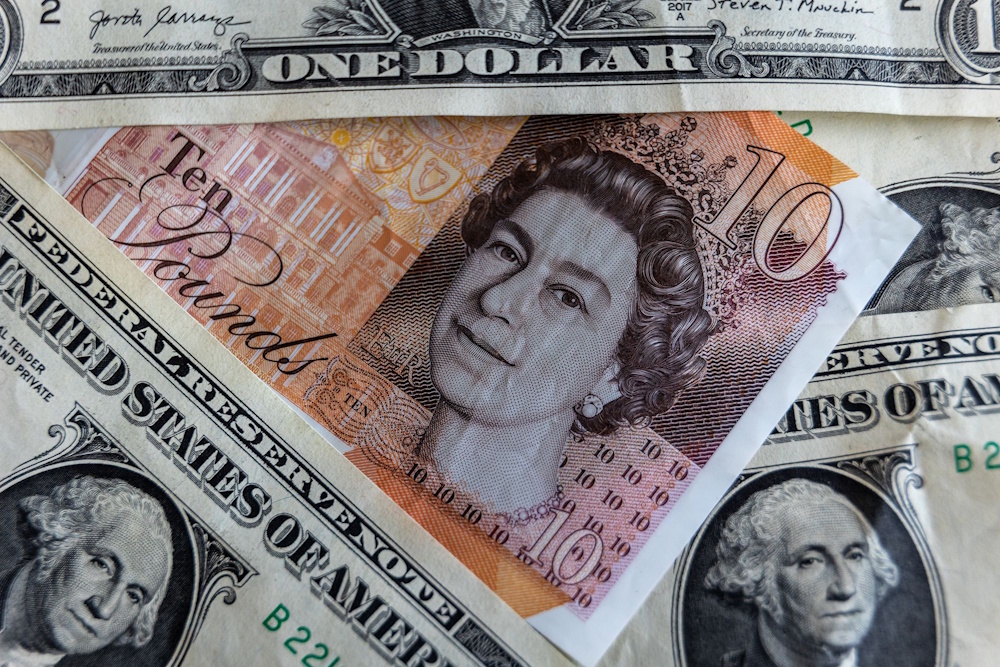
The British pound traded around 1.3429 on Thursday, slipping a marginal 0.15% on the session as it dipped intraday toward the 1.337 area before stabilising. The pair has demonstrated a remarkable degree of resilience compared to the euro, which is currently positioned near six-week lows. However, it remains constrained by a generally strong U.S. dollar, which continues to receive support from high yields and an inflationary environment driven by energy prices. Over the past week, Cable has exhibited a degree of stability, oscillating between a peak of approximately 1.351 on May 25 and a trough close to 1.3406 on May 21. This narrow range indicates a market in a state of suspension, anticipating new catalysts for movement. The pound is positioned above its 200-day simple moving average at approximately 1.34, yet remains below its 50-day average close to 1.35. The 14-day Relative Strength Index is around 53, indicating neutral momentum that reflects the current indecisiveness in the market dynamics. Beneath the surface, however, the technical picture has developed a cautious tilt, with intraday analysis indicating a short-term rising wedge formation — a typically bearish pattern — as the pair entered a profit-taking phase following recent gains. The interplay of a resilient yet constrained pound, a robust dollar, and emerging domestic political uncertainty results in Cable is currently manoeuvring through a precarious equilibrium, as the extensive consolidation observed in recent weeks exhibits minimal indications of a definitive resolution in either direction.
The primary force restraining Cable’s upside is the resilience of the U.S. dollar, which has drawn strength from the same factors supporting the greenback against all its major peers. The dollar has gained from rising oil prices linked to the Iran conflict and a succession of hawkish inflation indicators that have altered the discourse surrounding Federal Reserve policy. Markets are now factoring in a significant likelihood — by some assessments as high as 70% — of a Fed rate increase by December. This signifies a remarkable turnaround from the rate-cut anticipations that dominated at the beginning of the year, and it directly bolsters the dollar by maintaining elevated U.S. yields and favouring the carry advantage for the greenback. April’s headline PCE inflation at 3.8% year-over-year reinforced the narrative that the Fed under Chair Kevin Warsh may need to tighten rather than ease, a dynamic that drains support from currencies like the pound and provides a floor beneath the dollar. The greenback’s strength has been broad-based, with the U.S. currency rallying across multiple sessions due to a combination of energy-driven inflation risk and safe-haven demand arising from geopolitical turmoil. For Cable, the implication is that any rally attempt encounters a continuous obstacle from dollar strength, and the pound’s capacity to progress depends partly on whether the Fed’s hawkish stance ultimately eases or whether U.S. yields stay sufficiently high to maintain the carry trade in favour of the dollar.
A distinctly domestic risk affecting sterling is the escalating political turmoil in the United Kingdom, where increasing pressure on the government has created a risk premium that necessitates caution before positioning for further pound appreciation. Increasing demands for Prime Minister Keir Starmer’s resignation have fostered a climate of political instability, further intensified by a notable individual’s declaration of intentions to re-enter Parliament — a manoeuvre broadly perceived as a direct challenge to the current Prime Minister’s leadership. The associated by-election has emerged as a significant political obstacle and a central concern for markets assessing the government’s stability. Concurrently, the broader speculation surrounding leadership has occasionally inflicted a dual impact on the pound, particularly when juxtaposed with a stronger dollar. Political instability serves as a quintessential catalyst for currency depreciation, as it engenders uncertainty regarding fiscal policy, governance, and the overarching economic trajectory of the nation, thereby compelling investors to seek compensation for the heightened risk involved. The UK political situation differentiates Cable’s perspective from a straightforward interest-rate narrative, introducing a domestic layer of risk that has the potential to limit rallies and intensify selloffs, irrespective of the macroeconomic context. While the pound has demonstrated resilience in recent sessions, the political overhang continues to be a persistent concern that traders are observing closely, especially for any escalation that could provoke a more significant episode of sterling weakness or a wider crisis of confidence in the government.
On the monetary policy front, the Bank of England’s calculus has been reshaped by a notable cooling in UK inflation, which has delayed expectations for the timing of the central bank’s next interest-rate move. UK Consumer Price Inflation unexpectedly slowed to 2.8% year-over-year in April, down from 3.3% in the previous month, a significant deceleration that led traders to adjust their expectations regarding the timing of the next Bank of England rate hike. This dynamic is significant as it places the BoE in a more measured position, with the subdued inflation lessening the necessity to tighten policy, even as the energy-related price pressures stemming from the Iran conflict add complexity to the scenario. At the same time, sterling has garnered some support from expectations that the Bank of England will proceed with caution regarding any further rate cuts, indicating that the central bank is adopting a wait-and-see approach rather than committing to a definitive easing or tightening trajectory. The BoE’s measured posture reflects the genuine uncertainty facing UK policymakers, who must balance the disinflationary signal from the April CPI against the inflationary impulse from elevated energy costs and the broader global backdrop. For Cable, the BoE’s policy trajectory is a crucial factor, as any shift toward a more hawkish stance would bolster the pound by narrowing the rate differential with the U.S., while a dovish pivot would exert pressure on sterling. The cooler inflation has, for now, tilted the balance toward caution, leaving the pound’s monetary support somewhat ambiguous.
At the heart of the GBP/USD outlook is the interest-rate differential between the Bank of England and the Federal Reserve, a dynamic that has become increasingly intricate as both central banks address the inflationary consequences stemming from the global energy crisis. The pound’s fate is intricately tied to the trajectories of the two central banks: as the Fed adopts a more hawkish stance and markets assign a significant probability to a U.S. rate hike, the dollar benefits from a yield advantage that exerts downward pressure on Cable. Meanwhile, the BoE’s more cautious stance following the cooler April inflation reading has complicated the outlook for sterling, as the diminished urgency to hike eliminates a potential source of support for the pound. The interaction between these two policy paths serves as the primary determinant for the pair, and the existing setup — a hawkish Federal Reserve juxtaposed with a cautious Bank of England — slightly advantages the dollar, which elucidates why Cable has faced challenges in achieving a decisive upward movement despite its relative strength. Should the BoE surprise with a more hawkish turn, or should the Fed’s tightening bias soften, the differential could shift in the pound’s favour and provide the fundamental fuel for a sustained advance. Conversely, a further widening of the rate gap in the dollar’s favour would exert downward pressure on Cable, pushing it toward the lower end of its range. The market is fundamentally poised for clarity regarding which central bank will adopt a more aggressive stance. Until this situation is clarified, the pair is expected to remain within a defined range, exhibiting a slight downside bias that mirrors the dollar’s prevailing advantage.
