
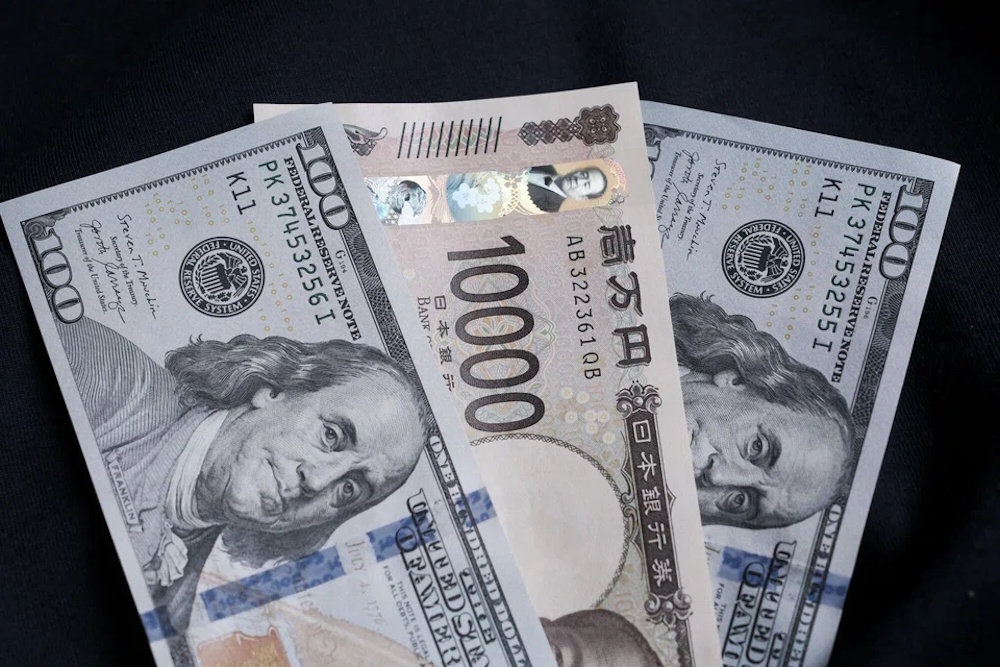
The USD/JPY exchange rate was approximately 159.50, maintaining its position near one-month highs and approaching the significant 160.00 threshold, which Japanese officials consider the boundary for acceptable yen depreciation. The pair has been steadily advancing for multiple sessions, reaching new one-month highs in the range of 159.45 to 159.65 as the yen finds it challenging to rebound against a generally strong dollar. This movement is supported by persistent energy-driven inflation trends and a reassessment of hawkish Federal Reserve policies that have bolstered the greenback against its primary counterparts. The 160.00 threshold has emerged as the pivotal battleground for the pair, a level just beneath which USD/JPY has consolidated since late March. Multiple attempts to breach this level have consistently faltered as the market assesses the significant upward fundamental pressure in juxtaposition with the persistent risk of intervention by Tokyo authorities. That tension characterises the current landscape: on one side, the yen is subjected to persistent downward pressure due to Japan’s energy-import burden, exacerbated by the Iran conflict, diminishing expectations for imminent Bank of Japan rate hikes, and a significant interest-rate differential that favours the dollar; on the other, the Japanese Ministry of Finance has shown its readiness to intervene to support the currency, having reportedly taken action around the 160 level previously. With the pair coiled just beneath the intervention trigger, USD/JPY presents a high-stakes standoff where the next decisive move hinges on whether fundamental pressures will overpower Tokyo’s resolve or if official actions and changing rate expectations will ultimately shift the momentum.
The foundation of USD/JPY’s recent ascent lies in the overarching strength of the U.S. dollar, which has garnered support from the same dynamics driving the greenback against currencies globally. The hawkish repricing of Federal Reserve policy, influenced by the energy-driven inflation spike associated with the Iran conflict, has sustained elevated U.S. yields and maintained the dollar’s carry advantage. Markets are now considering the likelihood of a Fed rate hike, contrasting sharply with the cuts that were broadly anticipated at the beginning of the year. April’s headline PCE inflation at 3.8% year-over-year reinforced the narrative that the Fed under Chair Kevin Warsh may need to tighten rather than ease, a dynamic that is particularly powerful for USD/JPY due to the pair’s sensitivity to the U.S.-Japan interest-rate differential. The higher U.S. rates climb, or the longer they remain elevated, the more attractive the dollar becomes relative to the low-yielding yen, fuelling the carry trade in which investors borrow cheaply in yen to invest in higher-yielding dollar assets. The elevated oil prices stemming from the Strait of Hormuz crisis amplify this dynamic through a second channel specific to Japan, as the country’s heavy dependence on energy imports means higher crude prices worsen its trade balance and weigh on the yen. This combination of a hawkish Fed lifting the dollar and an energy shock undermining the yen has created a potent upward force on USD/JPY, explaining why the pair has powered toward the 160 level despite the intervention risk.
On the Japanese side, the yen has faced challenges due to diminishing expectations for imminent Bank of Japan rate hikes and the severe effects of high energy costs on the economy. The narrative surrounding the Bank of Japan has undergone a significant transformation, as expectations for rate hikes diminish. This shift occurs as the central bank considers the intricate dynamics of domestic inflation, global uncertainty, and the energy shock, resulting in the yen lacking the monetary backing that a more assertive tightening strategy would have offered. This is consequential because the entire 2026 outlook for USD/JPY hinges on the pace at which the BoJ normalises policy and narrows the vast interest-rate gap with the United States. Any sign that the central bank is hesitating removes a key pillar of potential yen strength. Compounding the monetary headwind is Japan’s structural vulnerability to energy prices, as the country imports the vast majority of its energy needs. The elevated oil and gas prices stemming from the Iran conflict have worsened Japan’s trade deficit and added fundamental downward pressure on the yen. The interplay between a cautious central bank and the challenges of energy imports has positioned the yen among the weakest major currencies, with its recovery efforts proving ineffective despite interventions by Japanese authorities that yielded only fleeting respite. The yen’s ongoing weakness is indicative of profound structural and cyclical dynamics. Absent a hawkish shift from the BoJ or a significant decline in energy prices, the currency is expected to continue facing challenges against the dollar.
The 160.00 level represents a critical reference point for USD/JPY, serving as a psychological barrier, a technical resistance, and a political threshold that Japanese authorities have indicated they will protect. The level is regarded as the threshold of acceptable yen depreciation for Japanese authorities, and the market is keenly cognisant of Tokyo’s historical tendency to intervene in the foreign exchange market to support the yen when it nears or surpasses this limit, including a purported intervention in late April that temporarily strengthened the currency before the impact diminished. This creates a precarious situation for traders, as the strong fundamental factors driving USD/JPY higher intersect with the heightened risk that any movement toward or breach above 160 could prompt official yen-buying intervention, potentially leading to a swift and significant reversal. The April 30 high near 160.73 signifies the area where authorities have previously intervened, establishing it as a pivotal resistance and intervention point. The challenge for the market lies in the fact that interventions, although capable of generating significant short-term rallies in the yen, have historically resulted in only temporary effects when the underlying fundamentals continue to support dollar strength. This is evidenced by the yen’s consistent inability to maintain its gains following interventions. This establishes a high-stakes confrontation between the market’s fundamental beliefs and Tokyo’s determination, with USD/JPY coiling just below 160 as traders consider whether to elevate the pair and potentially provoke intervention or to adhere to the threshold and the evident readiness of authorities to uphold it.
