
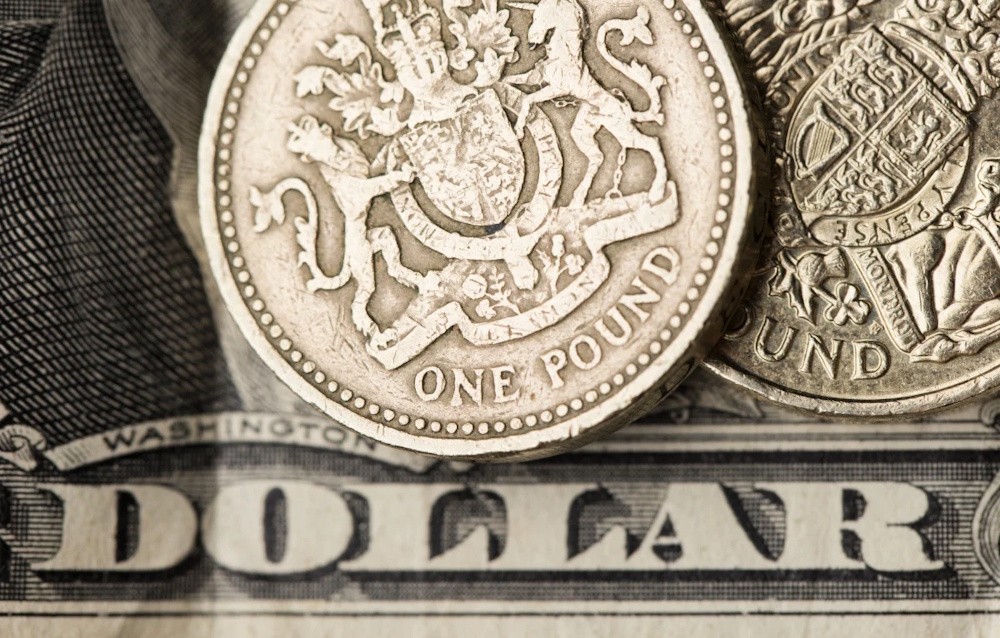
The GBP/USD pair advanced toward 1.33, achieving its highest weekly close in several months. The increase was propelled by a weaker U.S. dollar, declining Treasury yields, and improved sentiment in the wake of the UK Autumn Budget. Investors are closely monitoring the impending policy decisions from the Federal Reserve and the Bank of England, as these developments have the potential to significantly alter the currency landscape as the year concludes. The U.S. dollar experienced further depreciation following disappointing macroeconomic indicators and accommodating remarks from the Federal Reserve, with futures markets indicating an 87% probability of a 25-basis-point rate cut in December—up from 40% the prior week. As the 10-year Treasury yield fell below 4.1%, investors reduced dollar exposure, enabling GBP/USD to surpass the 1.3200 threshold that had previously capped gains, reflecting a broader shift toward risk assets amid expectations of several Fed rate cuts by 2026 that weaken the dollar’s rate advantage.
The UK Autumn Budget, delivered by Chancellor Rachel Reeves, provided a notable short-term boost to the pound. The government implemented a £22 billion fiscal buffer that stabilized gilt markets and eased concerns about fiscal discipline, with 10-year gilt yields falling around 15 basis points and supporting GBP/USD as markets welcomed the absence of new tax hikes. However, analysts warn that these benefits may fade given that most tax revenue increases are delayed until after 2029, leaving structural issues in productivity and investment unresolved. The Bank of England is facing mounting pressure to ease policy as inflation cools and consumer demand weakens, with markets pricing a 70% probability of a December rate cut driven by inflation trending toward 3.8%. Governor Andrew Bailey noted steady disinflation, moderating wage growth, and softening consumption data, and the narrowing GBP-USD rate differential currently lends support to GBP/USD even as lackluster UK quarterly GDP growth of about 0.2% continues to limit confidence.
From a technical standpoint, GBP/USD remains in an uptrend but is approaching strong resistance around 1.3330. The pair trades comfortably above the 50-day (1.3140) and 100-day (1.3080) moving averages, reinforcing the bullish bias, while a breakout above 1.3330 could expose the next resistance at 1.3370 and strong support remains near 1.3080. The RSI near 59 reflects mild overextension, hinting at potential consolidation before the next upward move. Key U.S. data releases—including ISM Manufacturing and Services PMIs, ADP Employment, and JOLTS Job Openings—will influence short-term direction; weak data may deepen USD losses and lift GBP/USD toward 1.3350, while stronger data could drive a dip toward 1.3120. Meanwhile, the UK’s Financial Stability Report and final Services PMI will help shape expectations for the BoE’s December policy decision. The U.S. Dollar Index dropping below 103.5 has triggered notable short-covering in the pound, with CFTC data showing a 14% reduction in net short GBP positions over the past two weeks, signaling improving sentiment even though much of the move remains speculative and driven by anticipated rather than confirmed policy divergence.
The medium-term outlook remains constructive, suggesting further gains with GBP/USD potentially approaching 1.34 if USD weakness continues and UK yields remain steady. If the pair fails to clear the 1.3330–1.3350 resistance zone, a pullback toward 1.3050 may occur, aligning with the lower boundary of the ascending channel, and a daily close below 1.3000 would invalidate the bullish setup and point to 1.2860 as the next downside level. Overall, the outlook is cautiously optimistic for GBP/USD, supported by falling U.S. yields, improved UK fiscal sentiment, and a softening dollar, with key resistance seen at 1.3370–1.34 and strong support at 1.3080. Unless U.S. economic data unexpectedly strengthens, the pair is likely to maintain its upward momentum heading into Q1 2026.