
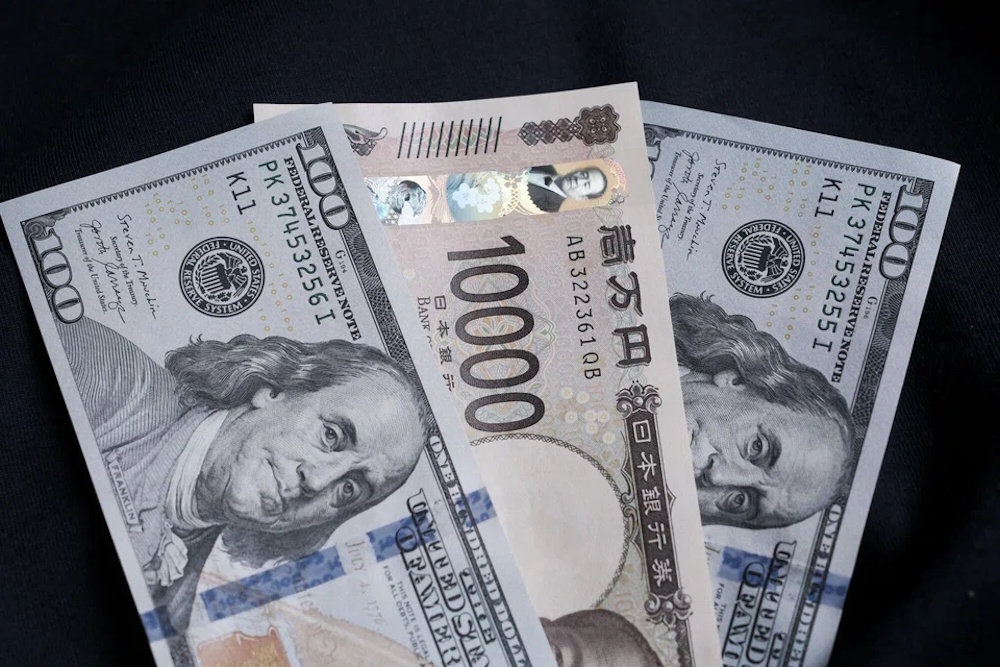
USD/JPY is currently at 157.73 as of March 6, 2026 — reflecting an increase of 0.20% during the session, even in light of a February NFP report that significantly surpassed expectations by the largest margin seen in years. The U.S. economy experienced a loss of 92,000 jobs, contrasting with an estimated creation of 59,000, resulting in a significant swing of 151,000 jobs. The unemployment rate increased from 4.3% to 4.4%, while Retail Sales saw a contraction of 0.2% month-over-month. Any one of those figures should have significantly impacted the dollar. Instead, the USD/JPY pair is approaching 158. The current macro regime is clearly illustrated by the prevailing geopolitical risk-off demand for dollars, which is overshadowing all labor market data signals. This dynamic will persist until there is a de-escalation in the Iran conflict or the reopening of Hormuz. The NFP miss did impact markets — momentarily. The likelihood of a Fed rate cut surged from around 35% before the release to 50% right after the data was published, as reported by Prime Market Terminal. San Francisco Fed President Mary Daly recognized that both mandates of the Fed are currently at risk, highlighting the vulnerabilities in the labor market. She pointed out that factors such as strikes, snow, and population benchmarking are complicating the situation. Ultimately, she expressed her preference for maintaining steady rates while gathering additional data. The Federal Reserve appears to be immobilized, rather than making a shift in policy. Inaction from central banks fails to generate the prolonged dollar selling necessary to significantly lower USD/JPY. The market quickly grasped this following the NFP release and capitalized on the dip.
Japan relies entirely on imports for its oil and natural gas supply. Brent crude has experienced a significant increase, rising from $72.50 to over $90 in just six days — a move exceeding 16% — due to Qatar’s force majeure and the closure of Hormuz, which has eliminated one-fifth of the global LNG supply from the market. Each dollar increase in Brent prices beyond $70 negatively impacts Japan’s current account, exerts pressure on the yen due to rising import costs, and complicates the Bank of Japan’s inflation assessment. The energy shock is concurrently undermining JPY fundamentals while complicating the execution of a BoJ rate hike — a dual pressure that the dollar safe-haven bid capitalizes on relentlessly. The Iran war has created a risk-off environment, typically favoring both the dollar and yen for safe-haven investments. However, the energy aspect puts Japan at a structural disadvantage, thereby solidifying the safe-haven preference towards the USD. The decline in Japan’s current account due to $90 oil is a matter of fact, not speculation. It is a matter of basic calculations. With each week that Hormuz remains closed, the arithmetic accumulates, and USD/JPY mirrors this situation. The USD/JPY has established a bullish engulfing candlestick pattern on the daily chart, indicating that buyers have fully absorbed Thursday’s range and pushed prices higher, thereby confirming a concentration of demand within the 157.00-157.50 zone. The RSI is currently at 61, positioned well above the 50 midline and gaining momentum while remaining below the overbought threshold of 70. The positioning of the RSI is significant: it indicates that bulls have the capacity to advance before chart mechanics present a challenge.
The ascending channel that has characterized USD/JPY’s structure since the February 11 low at 152.10 features an upper boundary at 159.20 and a lower boundary at 156.90, which is in alignment with the nine-day EMA at 156.82. The price is positioned above both the nine-day and 50-day EMAs, with the nine-day significantly exceeding the 50-day, which strengthens the upward momentum instead of leveling off. The previous descending resistance line from the 159.23 high has been breached and turned into support — a technically important change that alters what was once a ceiling into a floor. The March 3 high at 157.97 represents the immediate resistance that needs to be surpassed on a sustained closing basis to validate the next phase. A daily close above 157.97 sets the stage for 158.50 initially, followed by 159.00, and ultimately leads to the upper boundary of the ascending channel at 159.20-159.45. Surpassing 159.45 — the peak level since July 2024 — paves the way toward the all-time high of 162.00 achieved in July 2024. The initial support cluster is identified at the lower boundary of the 156.90 channel and the nine-day EMA positioned at 156.82. The medium-term floor is established at the 50-day EMA, currently positioned at 155.76. A daily close beneath 155.76 would indicate the initial sign of a breakdown in the ascending structure, suggesting the emergence of a bearish trend, with a target toward the five-month low at 152.10.
Bank of Japan Deputy Governor Ryozo Himino informed parliament on Friday that the BoJ is vigilantly observing yen movements, as current exchange rate fluctuations have a more significant influence on price dynamics compared to historical trends. Himino stated explicitly that yen moves could affect both inflation expectations and underlying inflation — the most direct acknowledgment yet that the BoJ views USD/JPY levels as a monetary policy input, not just a market observation. Japan’s wage growth reached 3.8%, marking the highest increase in three decades, while the yield on the 10-year JGB stands at 0.85%. The BoJ continues its accommodative stance in light of wage data, navigating the complexities of domestic inflationary pressures alongside the external impact of rising energy prices due to geopolitical disruptions. Finance Minister Suzuki has indicated a willingness to intervene around the 160 mark. The market’s collective consciousness establishes a firm ceiling between 158 and 160 — any rally approaching that range will encounter the intervention premium influenced by Suzuki’s previous statements. The 1-hour chart indicates that USD/JPY is consistently bouncing along the 20- and 50-hour EMAs, thereby establishing a clear short-term uptrend structure. Bulls aiming for a breakout above 158 are considering Thursday’s low at 156.44 as a buy-dip reference point — this is the level where the hourly trend structure must hold to sustain the bullish configuration as the weekend approaches. Richmond Fed President Thomas Barkin provided assertive remarks that bolstered dollar strength despite the NFP miss — recognizing the ongoing inflation and indicating no immediate need for cuts.
The disparity between Barkin’s tone and the labor market decline reflected in -92,000 jobs highlights the Fed’s challenge: a stagflation-like scenario where job losses are present alongside a year-over-year wage increase of 3.8% and a services ISM at a three-year peak of 56.1. Fed funds futures are currently indicating a total easing of 40 basis points through all of 2026 — reflecting the least dovish market pricing observed in recent months. The probability of a cut in March stands at zero. April: 16%. June: 37%. A Federal Reserve unable to address job losses due to persistent wage and services inflation will maintain a structurally supported dollar, despite any apparent weakness in headline payroll figures. The dollar bid is supporting USD/JPY, which is trading above 157 following a -92,000 NFP print. It is not irrational; it represents an accurate interpretation of a central bank caught between its obligations. Consider entering a buy position on USD/JPY during dips to the 156.90-157.00 range, with a target of 158.50 followed by 159.20. It is advisable to set a stop loss at a daily close below 155.76. The ascending channel structure remains intact, with both EMAs trending upward. The RSI indicates potential at 61, and the prevailing risk-off geopolitical demand for dollars fundamentally overshadows any individual labor market setback, provided Hormuz remains closed and Brent stays above $85. The 158-160 zone presents intervention risk that limits significant upward movement — however, the prevailing trend through that zone continues to be upward until Finance Minister Suzuki intervenes or the Iran conflict yields a credible ceasefire signal that the markets can factor in.