
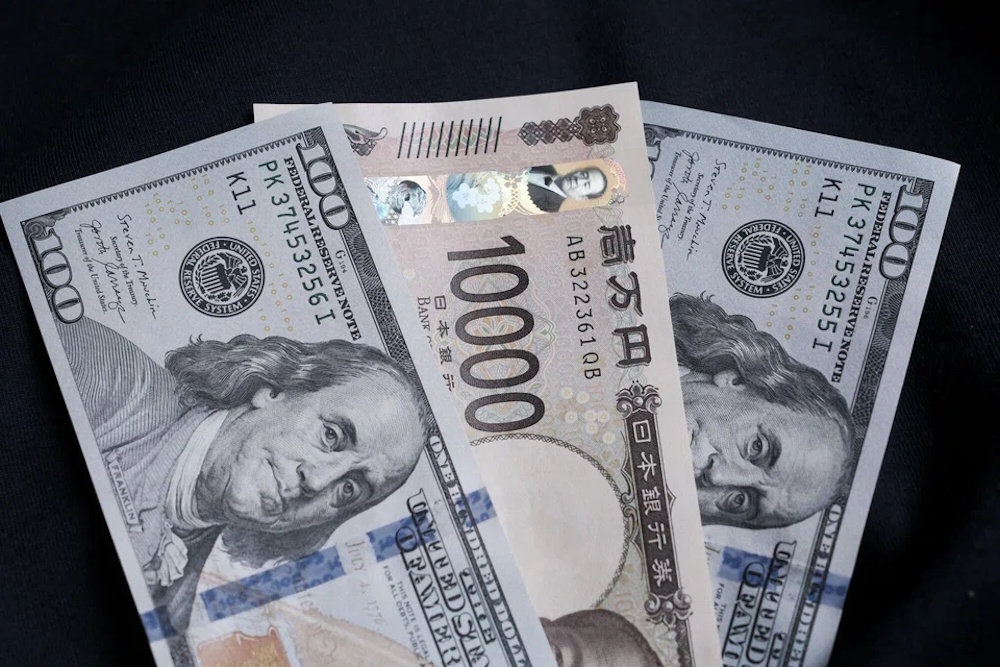
The USD/JPY pair is currently positioned between ¥158.33 and ¥159.31 on Friday, reflecting an increase of 0.4% to 0.66% for the day. This follows a notable decline of 1.3% on Thursday, which saw the pair dip to ¥157.51 before strong buying interest emerged. The recovery has been systematic — price rebounded effectively from the 20-day Exponential Moving Average at around ¥157.50 and is currently regaining territory above ¥158.00 as we approach Friday’s New York session. All three major moving averages are positioned favorably beneath the price: the MA-20 at ¥158.23, the MA-50 at ¥156.26, and the MA-200 at ¥154.13. The bullish structure established from the February 27 low of ¥155.54 remains intact. Thursday’s selloff represented a shakeout rather than a reversal. On Friday, the daily range commenced with an upward gap, and the pair has been examining the upper boundary of its intraday range close to the psychologically important ¥159.00 level. The 24-hour price prediction model indicates a target of ¥159.39, reflecting a 0.05% increase from current levels. The 48-hour target is set at ¥159.47, and the 7-day target stands at ¥159.59. The 1-month model indicates ¥163.21 — a 2.45% increase that would mark a new multi-decade peak. The 3-month target indicates a slight decline to ¥156.25 — a decrease of 1.92% — consistent with the Elliott Wave correction framework prior to a continuation of the main upward trend towards the 6-month target of ¥158.29 and eventually the 1-year target of ¥165.66, reflecting an additional upside potential of 3.98% from present levels.
The USD/JPY at ¥160 represents more than just a significant psychological benchmark. This level, if surpassed on a consistent daily closing basis, would signify the highest exchange rate between the dollar and the yen since 1990 — marking a 36-year peak that holds significant psychological and intervention-related implications, unmatched by any other price point in this currency pair at present. The market is closely monitoring the specific level above ¥160, which ranges from ¥160.40 to ¥160.74. This area represents the prior highs from the late 2024 intervention period and serves as the ultimate technical test. A daily close above ¥160.40 on convincing volume would signify a breakout that surpasses the highs dating back to 1990 — and such a structural breakout would likely enhance momentum buying in a manner that short-term fundamental analysis may not completely foresee. The ¥160.23 and ¥160.74 levels represent significant resistance — they are the intervention risk zone where the Bank of Japan has previously sold USD against JPY to uphold the value of the yen. In past instances when USD/JPY neared this zone, the Bank of Japan or Japan’s Ministry of Finance has intervened in the currency market, executing substantial yen-buying operations worth billions of dollars. The current setup is distinct in one crucial aspect: the BoJ’s governor Kazuo Ueda is indicating hawkish policy intentions instead of a stance favoring easy money. However, Japanese rates at 0.75% still reflect the most significant policy gap in the G10 currency complex compared to the Fed’s 3.50%–3.75%. The 275-basis-point differential serves as the primary force propelling USD/JPY towards ¥160, and it remains persistent despite any guidance from the BoJ. The US Dollar Index experienced a decline of 1.1% on Thursday, completely offsetting the 0.7% increase observed from Wednesday’s FOMC-driven surge. In tandem, USD/JPY reflected this trend with a 1.3% drop. The factors contributing to Thursday’s DXY decline were not related to a shift in Federal Reserve policy or an abrupt decline in U.S. economic indicators. The recent repricing event was influenced by concurrent hawkish signals from both the ECB and the Bank of England. This led to the interest rate swap markets in the Eurozone and the UK anticipating two 25-basis-point hikes each for 2026. When several key central banks adopt a hawkish stance at the same time, the Fed’s relative hawkishness loses its uniqueness — leading to a corresponding compression of the dollar’s safe-haven premium.
The ECB maintained rates at 2.00%, while the BoE remained at 3.75%, aligning with expectations. The unexpected aspect was the unanimous and clear hawkish guidance, especially highlighted by the BoE’s 9-0 vote and the ECB’s direct recognition of the inflation risks stemming from the energy shock. The signals altered the relative policy divergence assessment influencing DXY — the dollar ceased to be the only hawkish player present. The BoJ’s steady 0.75% rate and Governor Ueda’s press conference introduced a distinct yen-bullish factor, amplifying the dollar-weakening trend. This resulted in a 1.3% decline for USD/JPY on Thursday, while the overall dollar index experienced a smaller drop of 1.1%. Kelvin Wong at OANDA highlighted the specific mechanism: “A hawkish stance or guidance from the US Federal Reserve does not necessarily lead to sustained US dollar strength, as the currency’s path is ultimately influenced by relative monetary policy dynamics among other major developed market central banks.” That observation elucidates Thursday’s events accurately — it does not alter the medium-term USD/JPY trajectory, yet it serves as the most crucial framework for comprehending why the pair may decrease on days when the Fed adopts a hawkish stance, provided other central banks do the same concurrently. The Bank of Japan maintained its policy interest rate at 0.75% on Thursday — a decision that was widely expected. The genuine market reaction was driven by Governor Ueda’s press conference commentary, which exhibited a hawkish tilt in two distinct aspects. Initially, he emphasized that the ongoing spring wage negotiations are showing a strong likelihood of another year of consistent wage increases — an essential factor for the BoJ’s price stability mandate, as wage-driven inflation represents the structurally resilient type that the BoJ has clearly indicated is necessary before advancing policy normalization. Secondly, he emphasized the necessity for authorities to persist in observing the effects of currency fluctuations on consumer prices, particularly highlighting that FX movements “now may have more impact on prices than before” — a statement that is broadly understood as a subtle warning of intervention and hawkish guidance at the same time.
The interplay of ongoing wage pressure and increased FX sensitivity indicates that the BoJ is likely to pursue at least one more rate hike before the conclusion of 2026, assuming that the economic slowdown driven by the Middle East conflict is temporary. Ueda clearly indicated that an increase is feasible if the economic challenges related to the Iran conflict are temporary. The use of conditional language highlights the real uncertainty stemming from the oil shock — Japan relies on imports for nearly all its energy needs, and with Brent crude exceeding $108 per barrel, this acts as a direct burden on the Japanese economy. This situation constrains real consumption and may suggest a postponement of the normalization cycle. However, the BoJ’s trajectory — moving towards higher rates and stepping back from ultra-loose policy — remains unchanged. The only variable is timing, not the destination. The comprehensive monetary policy statement from the BoJ highlighted concerns regarding the unpredictability of economic growth, particularly in light of escalating energy prices stemming from the U.S.-Israel-Iran conflict. The caution expressed is economically valid — Japan’s real GDP is indeed influenced by the costs associated with energy imports — however, it does not diminish the significance of the wage data, which remains the key factor in the Bank of Japan’s policy decisions. If spring wage discussions yield substantial pay increases for the third consecutive year, the BoJ will have a solid basis for a rate hike, irrespective of short-term fluctuations in energy prices. The Federal Reserve maintained its rate at 3.50%–3.75% on March 18. The Bank of Japan stands at 0.75%. The 275-basis-point gap serves as the structural force driving USD/JPY higher from the February 27 low of ¥155.54 towards the ¥160 resistance level. The CME FedWatch tool currently indicates a zero probability for any Fed rate cut in 2026 — the market has entirely eliminated the rate-cut narrative that was prevalent at the beginning of the year. JPMorgan’s evaluation that the Fed might refrain from making any cuts in 2026 reflects a notably pessimistic view of the ongoing monetary policy cycle concerning risk assets. However, for USD/JPY, this outlook is clearly positive — the absence of Fed cuts implies that the 275-basis-point gap from the dollar perspective will remain unchanged.
The Bank of Japan has the ability to reduce the disparity from the yen perspective through interest rate hikes; however, the speed of any normalization process is fundamentally limited by the economic weaknesses present in Japan. Japan’s government bond market, recognized as the largest sovereign debt market globally in relation to GDP, exhibits a pronounced sensitivity to increasing borrowing costs. Each 25-basis-point increase by the BoJ raises Japan’s debt servicing expenses on a collection of government bonds that have been funded at nearly zero rates for many years. The BoJ faces challenges in implementing aggressive hikes without causing instability in the JGB market. This concern underpins the cautious approach to normalization, which is executed in 25-basis-point increments, spaced out by months of data observation, as opposed to the more substantial 50 or 75-basis-point adjustments seen in recent Fed tightening cycles. The 1-year forward prediction of ¥165.66 — 3.98% above current levels — aligns with a scenario in which the Fed maintains its rate throughout the year at 3.50%–3.75%, while the BoJ implements at most one additional 25-basis-point increase to 1.00%. This results in a narrowing of the rate differential from 275 basis points to around 250 basis points. The differential is not experiencing a significant compression. This represents a subtle modification that could temper the rise of USD/JPY without completely halting it, especially if the ongoing energy crisis in the Middle East continues to impact Japanese economic growth and postpone the normalization efforts of the Bank of Japan. The technical framework for USD/JPY is established through a distinct hierarchy of support and resistance levels that delineate trading opportunities across all timeframes. The 20-day EMA at ¥157.50 stands as the most pertinent level — it served as precise support during Thursday’s intraday low of ¥157.51, and the rebound from this point is the key driver behind Friday’s recovery to ¥158.33–¥159.31. This occurrence is not merely coincidental. The 20-day EMA has served as a crucial dynamic support level during the rise from ¥155.54. Its maintenance as support during Thursday’s test provides additional technical validation that the primary uptrend from February 27 continues to be structurally sound.
The price action has breached the minor ascending channel support established from the February 27 low — a development that Kelvin Wong at OANDA has recognized as bearish. Nonetheless, the breach of that channel is taking place amid a corrective wave within a broader impulse. The crucial inquiry is not about the integrity of the minor channel but rather if the 20-day EMA support remains intact. It remained intact. Thursday’s movement from ¥157.51 to Friday’s ¥159.31 — a 180-pip intraday recovery — serves as the market’s response to the question of whether the channel breakdown was indicative or merely a distraction. The 14-day RSI has transitioned from the overbought 60–80 zone into the neutral 40–60 range after Thursday’s pullback. The RSI is moving from an overbought state towards neutral, yet it has not dipped into oversold territory, which exemplifies a classic mid-trend correction. This movement effectively addresses the overbought condition while maintaining the primary trend direction. The MACD continues to hold in positive territory and above its signal line, indicating that medium-term momentum remains bullish, even in light of recent near-term volatility. The ADX fails to indicate a definitive trend direction in Friday’s session — momentum remains contested near the ¥159.00 resistance zone — aligning with expectations for a market that is consolidating following a significant one-day decline prior to making an attempt to continue the primary movement. The Elliott Wave framework highlights ¥159.86 as the pivotal level that dictates whether USD/JPY will proceed towards ¥156.07–¥155.17 in a corrective phase or surge higher towards ¥161.00–¥163.00 in an acceleration. The primary outlook suggests a downward movement for the pair, correcting below ¥159.86, with a target in the ¥156.07–¥155.17 range — indicating a decrease of roughly 2.3%–2.5% from present levels. The alternative scenario — a sustained daily close above ¥159.86 — negates the corrective thesis and paves the way to ¥161.00–¥163.00, aligning with the intervention risk zone and ultimately reaching levels not observed since 1990.
The Elliott Wave analysis indicates that USD/JPY is currently situated in an ascending fifth wave of a larger degree — specifically wave 5 — with wave (1) of 5 developing as the present structure. In the current wave (1), wave 3 of (1) has reached completion, wave 4 of (1) has undergone correction, and wave 5 of (1) is in the process of development on the H4 timeframe. In the context of wave 5, wave i has been established while wave ii is presently undergoing a corrective pullback. This indicates that the decline observed on Thursday represents wave ii of 5 within the broader framework, and the following recovery marks the initiation of wave iii. According to Elliott Wave principles, this phase is generally characterized as the most robust and prolonged movement within any five-wave sequence. If this count is accurate, the pair is positioned at the onset of the most robust phase of the current impulse move, rather than nearing an exhaustion peak. The immediate resistance sequence is ¥159.00 first, followed by ¥159.37, which serves as the crucial short-term resistance level. A daily close above ¥159.37 would negate the short-term bearish outlook that Kelvin Wong at OANDA has been observing and would indicate that the correction from Thursday’s peak is finished. Surpassing ¥159.37 sets the stage for a move towards ¥159.86, which serves as the critical pivot according to Elliott Wave analysis. Following that, the focus shifts to the range of ¥160.23 to ¥160.74, identified as the intervention risk zone, establishing the main directional trade.
