
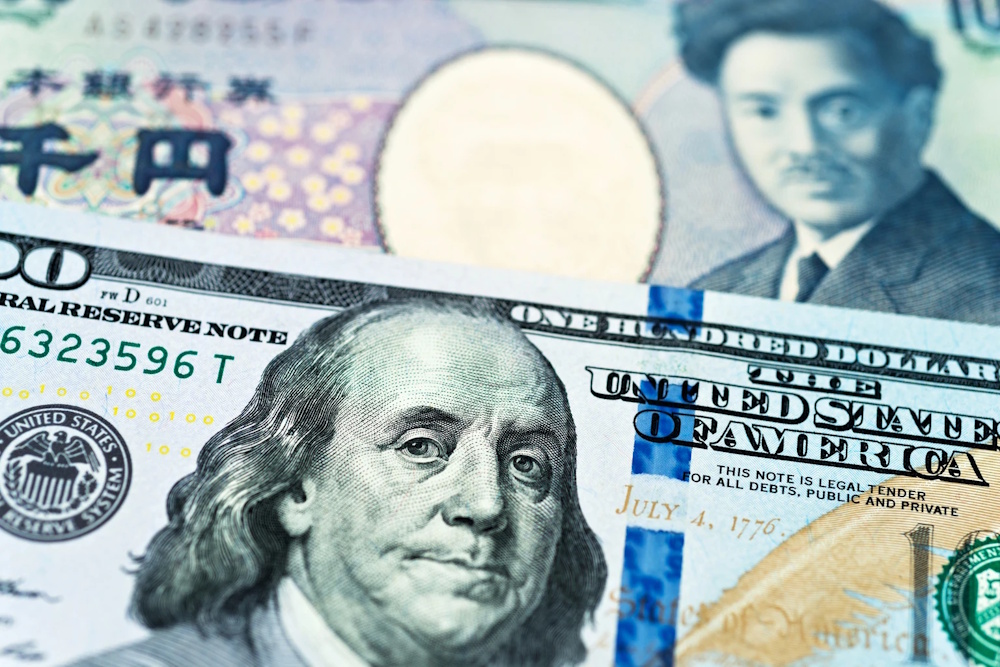
USD/JPY concluded the week challenging the 158-yen barrier — a level that has thwarted every rally attempt for weeks and now serves as the last obstacle before the significantly impactful 160-yen threshold. The Japanese yen concluded the past five sessions as the weakest among major currencies, lagging behind even the Swiss franc, which emerged as the strongest performer. The observed relative weakness is indicative of a persistent trend rather than a mere temporary fluctuation. It highlights a fundamental disparity between a Federal Reserve that has just encountered robust PPI data (0.5% month-over-month compared to the anticipated 0.3%) and a Bank of Japan that is immobilized by a government debt burden so substantial that significant rate hikes could instigate a fiscal crisis. Prime Minister Sanae Takaichi’s expansionary fiscal agenda — confirmed by her upcoming snap lower house election — is likely to exacerbate the existing debt burden rather than alleviate it. The Japanese government bond markets have experienced a significant downturn, resulting in increased yields driven by fiscal concerns rather than expectations of monetary tightening. This differentiation contributes to a depreciation of the yen instead of its appreciation. Now, let’s turn our attention to Iran. The Strait of Hormuz is currently closed, leading to a surge in oil prices. Gold has approached $5,400, while silver has traded above $93.
Additionally, the VIX has increased by 6.60%, reaching 19.86. In typical circumstances, geopolitical turmoil leads to an influx of capital into the yen, regarded as a safe haven. However, Japan relies on imports for nearly all of its energy needs. A prolonged increase in oil prices exceeding $80 — as indicated by Brent OTC trades — acts as a terms-of-trade shock that eclipses any safe-haven demand the yen might typically attract. The upcoming week features ISM Manufacturing on Monday, Eurozone CPI on Tuesday, ISM Services on Wednesday, culminating in the key event: U.S. Non-Farm Payrolls on Friday. Every data point either supports or contests the rate differential that has propelled USD/JPY upward without pause. The 160-yen level serves not as a ceiling but as a significant swing high from 1990. A breach above this point paves the way for movements that have remained unseen for 36 years. The Japanese yen weakened against all other major currencies last week. The Swiss franc experienced the most significant appreciation, resulting in the largest gap between the strongest and weakest G10 currencies. This spread highlights fundamentally distinct monetary policy paths, fiscal credibility, and vulnerabilities related to energy imports. Last week, merely 11% of all significant currency pairs and crosses experienced movements exceeding 1%, reflecting a notable compression in volatility throughout the wider FX market. The yen’s lackluster performance in a low-volatility setting is significant: even in the absence of global pressures for major adjustments, there is a consistent outflow of capital from yen-denominated assets toward more lucrative options.
The interest rate differential serves as the mechanism. The Federal Reserve stands at 4.75%, with market expectations now reflecting just two rate reductions of 0.25% anticipated throughout 2026, a decrease from the three cuts projected the previous week. The recent hawkish repricing came after the release of Friday’s producer price index, which indicated a 0.5% monthly increase compared to the 0.3% consensus expectation. The PPI serves as a key indicator for consumer inflation, and the recent overshoot indicates that the disinflation narrative, which could have justified significant easing by the Fed, has come to a halt. With two reductions of 25 basis points each, the Fed funds rate would conclude 2026 at 4.25% — significantly higher than what the Bank of Japan can provide without jeopardizing the stability of the entire Japanese government bond market. The fiscal position of Japan indicates that the interest rate gap is structural instead of cyclical. The Japanese government’s debt surpasses 260% of GDP, marking the highest level among advanced economies by a significant margin. The Bank of Japan has consistently acted as the marginal buyer of JGBs for more than ten years, maintaining yields at artificially low levels to avoid debt service costs from taking up an unsustainable portion of government revenue. Each basis point rise in JGB yields results in the Japanese government incurring billions of yen in extra interest payments. The Bank of Japan is constrained in its ability to raise rates significantly, as such action would likely initiate a fiscal spiral — a fact recognized by the market. The current weakness of the yen should not be viewed as a mere temporary positioning issue. The discussion centers on the mathematical challenge Japan faces in aligning its rates with those of the U.S. without risking a default on its own debt.
Prime Minister Sanae Takaichi’s choice to initiate a snap lower house election has introduced a domestic political factor that exacerbates the yen’s inherent vulnerabilities. Takaichi’s party is anticipated to secure a robust majority, which would enhance her parliamentary authority to execute the expansionary fiscal agenda that markets have been increasingly apprehensive about. The outcome of the election is clear; however, it is the ramifications of the policies that hold significance. Takaichi’s spending plans entail considerable fiscal stimulus through infrastructure, defense, and social programs, financed by increased government borrowing, despite Japan’s debt-to-GDP ratio already being the highest among developed nations. The Japanese government bond market has responded to the potential for fiscal expansion with a selloff, resulting in higher yields due to a necessary repricing of fiscal risk, rather than any anticipation of tightening by the Bank of Japan. This distinction is crucial for analyzing USD/JPY: when bond yields increase due to inflation expectations or a hawkish stance from the central bank, the currency generally appreciates (higher yields draw in capital inflows). When bond yields increase due to fiscal concerns (lenders seeking greater compensation for credit risk), the currency depreciates (capital exits the weakening fiscal environment). The recent selloff of Japan’s JGB is of the latter type, resulting in a decline of the yen, despite a technical increase in yields.
Takaichi’s remarks have sparked speculation regarding Tokyo’s potential intervention in currency markets to bolster the yen. The uncertainty in this situation leans towards a negative outlook. If the government were dedicated to safeguarding the currency, it would communicate that dedication unmistakably. The ambiguity indicates that Takaichi perceives a weaker yen as tolerable — or perhaps even advantageous — for her export-focused economic approach. In 2024, Japan took action at around 160 yen, utilizing hundreds of billions of yen from its reserves to mitigate the depreciation. If Takaichi’s government shows reduced willingness to intervene, the 160-yen level loses its importance as a policy-supported ceiling and transforms into just another resistance level on the chart. President Trump’s nomination of Kevin Warsh as the next Federal Reserve Chair introduces a structural bullish element for the dollar, a trend expected to continue throughout the confirmation process and into his term. Warsh is viewed as more hawkish than the markets expected — his stance on monetary policy indicates a readiness to sustain elevated rates for an extended period if inflation data supports such a decision. The dollar experienced a significant rebound from its recent four-year lows after the nomination, with the DXY forming a small doji candlestick on the weekly chart, indicating a phase of consolidation rather than indecision.
The DXY is presently at 97.57, positioned beneath its 3-month level yet above its 6-month level — a nuanced technical scenario that illustrates the ongoing conflict between dollar bears, who point to the long-term downtrend, and dollar bulls, who highlight the hawkish shift in Fed expectations. Regarding USD/JPY, the Warsh nomination presents a clear bullish outlook: a less dovish Fed Chair indicates that the interest rate differential favoring the dollar will remain in place longer than what was previously anticipated in pre-nomination pricing. The term of incumbent Chair Jerome Powell concludes in May, presenting a transition period that allows markets to anticipate Warsh’s expected policy approach prior to his official appointment — a phase during which USD/JPY is likely to trend upwards. The Senate confirmation process introduces a degree of uncertainty; however, Warsh’s credentials—his experience as a former Fed Governor, his background at Goldman Sachs, and his established relationships with both parties—indicate that confirmation is more likely than not. The market’s response to the nomination — the strength of the dollar and the hawkish adjustment of rate cut expectations — represents the primary impact. The sustained reduction in the probability of aggressive easing represents a second-order effect, maintaining the dollar’s strength against low-yielding currencies such as the yen.