
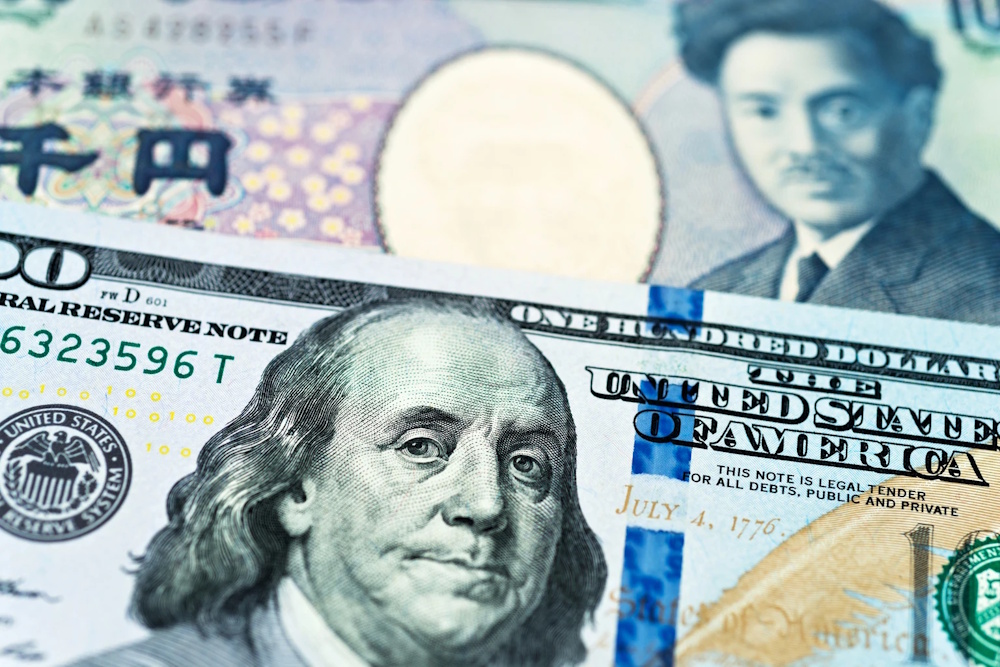
The USD/JPY was observed at 163.19, reflecting an increase of 0.42% during the session and achieving a new peak not recorded since 1986, following a dip to 162.84 the previous day — marking the yen’s lowest value against the dollar since December 1986. The Japanese currency has depreciated approximately 11% over the past year, currently positioned at four-decade lows, even as the Bank of Japan has been engaged in a policy of raising interest rates. That contradiction encapsulates the entire narrative, presenting a more compelling story than the prevailing consensus on yen strength that characterised forecasts earlier in the cycle. The arrangement was anticipated to unfold in an alternative manner. The BoJ has shifted from its ultra-loose policy, increasing its rate to 1.00% and indicating a hawkish stance, while the rate differential with the US has narrowed from its position at the beginning of the year. Textbook analysis indicated that a tightening Bank of Japan should bolster the yen. Instead, the yen continues its decline to levels not observed in four decades, as two dominant forces overshadow the Bank of Japan’s rate hikes: a Federal Reserve that has adopted a hawkish stance, and an oil shock that is significantly impacting Japan’s trade balance. The Federal Reserve side is the initial factor to consider. Under new leadership, the US central bank has adopted a hawkish stance, with expectations for rate hikes increasing due to the inflationary pressures driven by oil. Consequently, the rising odds of Fed hikes have strengthened the dollar against the yen, despite the Bank of Japan’s tightening measures. The rate differential, with US rates at 3.50%-3.75% against Japan’s 1.00%, persists at approximately 250 to 275 basis points in favour of the dollar. That gap serves as the carry-trade fuel that maintains the yen’s position.
The second weight is distinctly Japanese and closely linked to the oil narrative permeating every market this week. Japan stands as the most energy-import-dependent major economy, and with Brent prices exceeding $91 amid the escalation in the Middle East, the nation’s energy import bill is swelling — contributing to a deteriorating trade balance that is fundamentally detrimental to the yen. The depreciation of the yen exacerbates the cost of dollar-denominated energy imports, creating a detrimental cycle in which yen weakness contributes to the trade deficit, which in turn perpetuates further yen depreciation. Intervention looms over the entire situation. At 40-year lows, speculation is mounting that Japanese authorities will intervene to support the currency — the unpredictable factor that limits potential gains but may not alter the prevailing trend, considering scepticism about the effectiveness of such interventions. The forecast represents a conflict between the pressures undermining the yen and the potential for official measures to support it. The historic nature of the current move deserves emphasis, as USD/JPY at 163.19 is trading at levels that predate most of the current market. The pair reached 162.84 in the previous session — marking the yen’s lowest value against the dollar since December 1986, a nearly four-decade low — before advancing to a new high above 163 on Wednesday. This isn’t a routine currency move; it’s the yen at generational lows. The extent of the yen’s depreciation is pronounced across various timeframes. The currency has depreciated approximately 11% against the dollar over the past year and around 1% over the past month, continuing a trend of multi-year weakening that has seen USD/JPY rise from the 139-158 range of 2025 to above 163 currently. The persistence of the advance — characterised by a steady ascent to new peaks rather than a sudden surge followed by a pullback — indicates a fundamental vulnerability in the yen rather than a fleeting disruption.
The psychological significance of these levels influences the manner in which the market interacts with them. Round numbers and multi-decade highs draw significant interest: 163, and above it 164 and 165, represent levels where bank forecasts converge and where speculation regarding intervention escalates. The pair grinding to fresh 40-year highs places it in uncharted recent territory, characterised by a scarcity of technical reference from the modern era. In this context, the market is attentive to official intervention as much as it is to fundamental drivers. The context of how it arrived at this point reshapes the outlook. USD/JPY rose above 162 on growing Fed rate-hike expectations, reaching its highest level in around 40 years — indicating that the latest movement was primarily influenced by the dollar’s strength, propelled by the Federal Reserve’s hawkish stance, compounded by the yen’s inherent structural weaknesses. The pair is at historic highs due to the simultaneous strength of the dollar and the weakness of the yen, a rare alignment that has led to levels not observed since the mid-1980s. That alignment is what the forecast must evaluate: does it endure, or does something — intervention, de-escalation, a policy shift — disrupt it? The central puzzle of USD/JPY lies in the fact that the Bank of Japan is raising rates while the yen continues to weaken — a paradox that contradicts the conventional relationship and shapes the outlook. Comprehending the reasons behind the ineffectiveness of the hikes is crucial. The Bank of Japan has indeed implemented a tightening policy. It raised its policy rate by 25 basis points to 1.00% and signalled a hawkish stance, marking a historic shift away from the decades of zero and negative rates that characterised Japanese monetary policy. Following the cessation of yield curve control and the initiation of normalisation, the Bank of Japan is aligning with the desires of yen bulls by increasing rates and managing the most critical factor in any USD/JPY projection: Japanese interest rates. In theory, this should bolster the currency.
The issue at hand is one of credibility. Markets remain sceptical regarding the Bank of Japan’s dedication to prolonged tightening measures. Addressing yen weakness is expected to be a gradual process, as traders question the central bank’s willingness to implement the substantial and ongoing rate increases necessary to significantly narrow the rate differential. A solitary increase to 1.00% in the face of a US rate exceeding 3.50% does not alter the carry dynamics, and until market participants are convinced that the BoJ will continue its trajectory, such hikes fail to produce lasting strength in the yen. The BoJ is tightening, yet the pace and conviction are insufficient to counteract the downward pressures on the yen. The speculation regarding a September hike serves as the current catalyst. Discussion surrounding a potential rate increase by the BoJ in September lends some support to the yen, serving as one of the factors limiting the pair’s upward movement; however, this remains speculative rather than a definitive commitment. If the BoJ implements a hike in September and indicates further increases are on the horizon, it may ultimately alter the credibility dynamics and catalyse an appreciation of the yen. If it hikes hesitantly or holds, the paradox continues and the yen remains weak. The BoJ’s decision to hike rates amidst a declining yen indicates that the market perceives Japanese monetary policy, despite its historic normalisation, as insufficient to counterbalance the dollar’s yield advantage and the structural forces that negatively impact the yen in Japan. The dollar half of the pair is influenced by a Federal Reserve that has adopted a hawkish stance under new leadership, with Fed rate-hike expectations serving as the primary catalyst for USD/JPY’s ascent to 40-year highs. The Fed’s stance serves as the counterbalance to the BoJ’s tightening measures. The Fed’s shift has been decisive. Under its new chair, who took office in the spring, the central bank has shifted from the easing bias that characterised previous forecasts, maintaining rates at 3.50%-3.75% as markets increasingly anticipate a hike — with significant probabilities of an increase by September.
Increasing expectations for Fed rate hikes have driven USD/JPY above 162, reaching its highest level in approximately 40 years. The dollar strengthens on the prospect of tighter US policy, and that strength is most pronounced against the low-yielding yen. The inflationary pressure driven by oil is the catalyst behind the Fed’s hawkish stance. Crude prices exceeding $91 amid escalating tensions in the Middle East contribute to rising US inflation, prompting a Federal Reserve that is confronted with reaccelerating price pressures to favour tightening measures over easing. The same oil shock that adversely affects Japan’s trade balance simultaneously fuels the Fed’s hawkish stance, which in turn strengthens the dollar — a dual impact on the yen stemming from a singular cause. The geopolitical premium in oil is influencing USD/JPY via both currencies. There exists a caveat to the strength of the dollar, however. Expectations surrounding Fed rate hikes are poised to bolster the dollar in the near term; however, this support may prove transient due to the likelihood of declining crude and petrol prices in the future, coupled with political pressures advocating for rate reductions. If the Middle East experiences de-escalation and oil prices decline, the inflationary pressures will diminish, leading to a potential softening of the Federal Reserve’s hawkish stance and a weakening of the dollar’s support. This scenario would consequently alleviate the pressure on the yen. The dollar note also paused after a four-day rally as traders monitored US-Iran de-escalation efforts, indicating that the market remains vigilant to the potential for a reversal risk. Currently, the hawkish stance of the Federal Reserve serves as a driving force for the dollar while placing a strain on the yen; however, this situation is linked to an oil premium that may eventually dissipate.
