
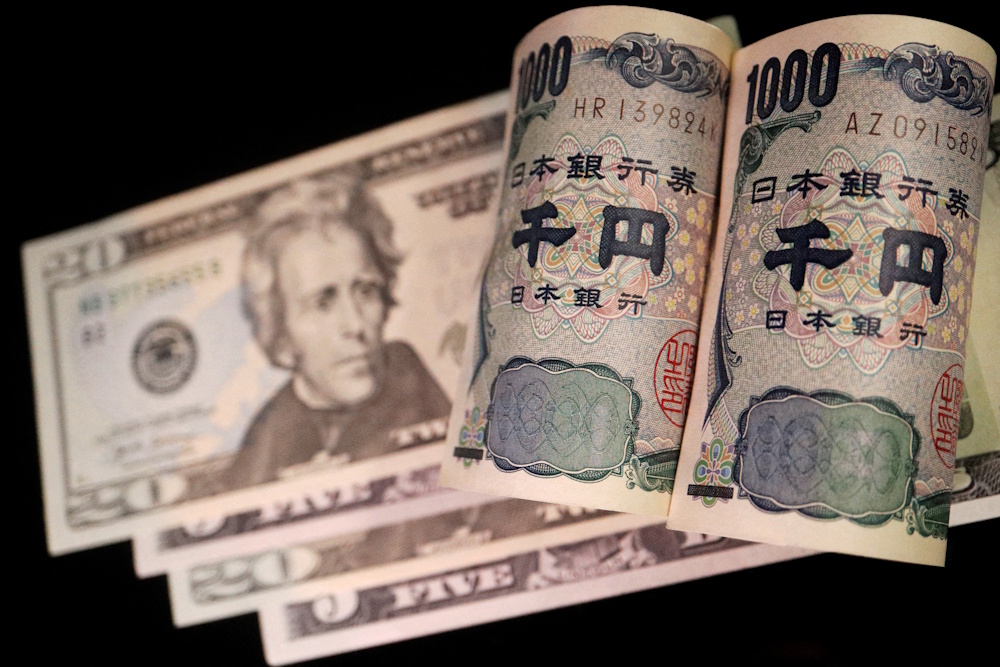
USD/JPY is currently positioned around 161.1 as the July 4 weekend approaches, having retreated from a four-decade peak of approximately 162.5-162.8 reached on July 1 — marking the yen’s lowest point since 1986. The yen experienced a notable increase of nearly 1% toward 161 on Thursday before reducing its gains, marking its most significant rebound in weeks. This movement was influenced by two concurrent factors: a weaker US jobs report that tempered expectations for Federal Reserve interest rate hikes, and news that Japan plans to implement stealth intervention aimed at surprising speculators. The dollar was on track for its most significant decline against the yen since late April. However, the pair continues to be anchored close to its multi-decade high, and the underlying cause is structural. The thesis posits that the carry trade, alongside the substantial US-Japan rate differential, serves as the gravitational force maintaining USD/JPY at its current levels. Conversely, the risk of acute intervention acts as a counterweight, limiting potential upside movement. The Bank of Japan raised its policy rate to 1% in June — the highest since 1995 — while the Federal Reserve remains at 3.50-3.75%, resulting in a differential of approximately 250 basis points. That differential sustains the yen carry trade: borrowing yen at low rates, investing in US assets with significantly higher yields, and capturing the spread. The carry is the force that has propelled USD/JPY to four-decade highs and maintains a bias toward higher levels in line with bank bull targets, despite the persistent weakness of the yen.
Countering that upward momentum is the risk of intervention, which is currently very much in play. On April 30, Japanese authorities took action, with Finance Minister Satsuki Katayama cautioning that they would react suitably to currency fluctuations as necessary. Market participants are observing the US July 3 holiday as a possible opportunity for Tokyo to purchase yen, as the reduced liquidity may amplify the effects of any official measures. The yen’s Thursday spike has already fuelled speculation regarding potential intervention, and the holiday session presents an ideal opportunity for Tokyo to act. USD/JPY at 161.1 occupies a clearly delineated conflict area. The 160.87 July 2 low and the 160 psychological level serve as anchors for the downside, while the 162.00 area and the 162.5-162.8 four-decade high limit the upside. The structural carry-driven pull is increasing; the intervention risk and the dovish Fed shift are decreasing. And beneath it all sits the tail risk that defines this pair: a violent carry unwind, reminiscent of July 2024, that could result in a rapid decline of hundreds of pips in USD/JPY within hours. All subsequent information elaborates on that point.
The yen’s Thursday rebound was pronounced, driven by two distinct factors. First, the soft US data: the June jobs print of 57,000 against a 115,000 consensus, following a weak ADP figure, cooled expectations for a Fed rate hike and pulled the dollar lower across all G10 currencies. Fed Chair Kevin Warsh noted that US inflation expectations had moderated over the past month, indicating a lack of urgency to increase interest rates. The dollar’s decline, prompted by weaker macroeconomic data, was the initial catalyst for the yen’s recovery from its four-decade low. Second, and more specific to the yen, was the shift in intervention strategy. Source reported that Japanese officials will cease the practice of signalling their intervention plans in advance — a departure from the approach taken prior to the April 30 operation — and will instead concentrate on targeting speculators. That report prompted market participants to unwind their bearish bets on the yen, as a stealth-intervention approach renders shorting the yen considerably more perilous. The interplay of a weaker dollar and the announcement of intervention strategies resulted in a nearly 1% increase in the yen, pushing it toward 161.
The violence associated with the move has heightened suspicions regarding potential intervention. USD/JPY experienced its most significant four-hour drop since May, prompting immediate speculation regarding potential direct intervention by Japanese authorities in the market. Whether the decline was a result of direct intervention or merely the unwinding of yen shorts in response to the report, the outcome was identical — a significant rally in the yen from its four-decade low, serving as a reminder to market participants of how swiftly the pair can reverse when the prospect of intervention becomes tangible. The yen experienced a notable spike amid suspicions of intervention, prompting a significant response from the market. For the forecast, the Thursday bounce illustrates the two forces that may counter the carry-driven uptrend: a dovish Fed shift and intervention risk. The soft US data cooling hike bets weakens the dollar side; the stealth-intervention shift and possible direct action strengthen the yen side. However, the rebound merely shifted USD/JPY from 162.5 to 161 — a slight correction within a significant upward trend, indicating the persistent strength of the underlying structural forces. The bounce serves as a caution regarding potential downside risks, rather than indicating that the uptrend has been definitively broken.
The primary factor influencing USD/JPY is the rate differential, which serves as the fundamental force maintaining the pair at levels not seen in four decades. The Bank of Japan raised its benchmark policy rate to 1% in June — the highest since 1995 — while the Fed maintained its target range at 3.50-3.75%, leaving a gap of around 250 basis points. That differential is what sustains the flow of capital toward dollar-denominated assets and away from the low-yielding yen, serving as the structural force driving USD/JPY higher. The mechanism is monetary-policy divergence, the most influential factor in any USD/JPY forecast. When one central bank maintains rates significantly higher than another, capital tends to flow toward the currency offering higher yields, resulting in a movement of the pair in that direction. The 250-basis-point gap between the Fed and the BoJ explains why USD/JPY is positioned near 161 instead of the 140s or 150s. The dollar offers significantly higher returns compared to the yen, and this yield advantage attracts capital into dollars, keeping the yen at multi-decade lows.
The differential is narrowing, albeit at a gradual pace, and this represents the critical nuance. The BoJ is tightening from decades of zero and negative rates, while the Fed’s hike path remains uncertain following the soft jobs data — thus, the gap is compressing from both sides. However, it commenced the year at approximately 325 basis points and currently hovers around 250, with the compression occurring at a gradual pace. A 250-basis-point differential continues to strongly favour the dollar, which explains the persistent weakness of the yen, despite the Bank of Japan’s rate hikes. The narrowing gap does not imply a rapid strengthening of the yen; rather, it indicates that the upward pressure on USD/JPY is easing marginally. For the forecast, the rate differential serves as the structural anchor that maintains the USD/JPY at elevated levels and inclined towards an upward trajectory. As long as the gap remains close to 250 basis points, the dollar’s yield advantage sustains the pair near its peak levels. The bullish scenario posits that the differential remains substantial — characterised by a hawkish Federal Reserve and a gradual approach from the Bank of Japan — thereby maintaining USD/JPY elevated in proximity to the bank’s targets. The bearish scenario suggests that the differential narrows more rapidly, influenced by a dovish Federal Reserve and a strengthening Bank of Japan, resulting in a decline in the pair. The speed of that compression is what dictates the correctness of either the dollar bulls or the yen bulls.
