
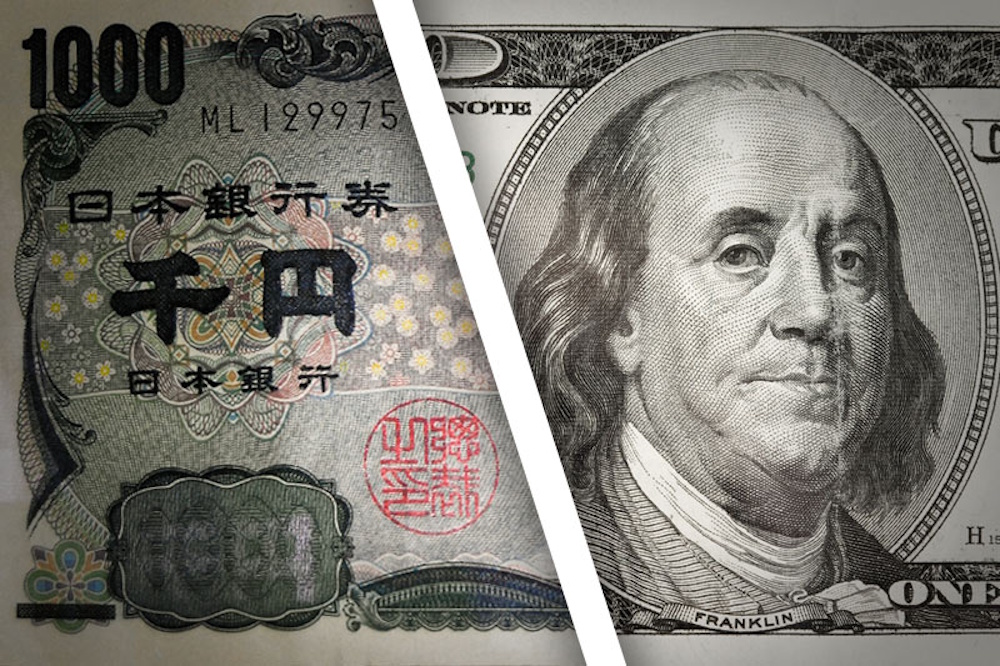
USD/JPY is currently at 158.33, reflecting an increase of 0.6% from the previous close of 157.39 on Wednesday. The yen weakened past 158 per dollar in Tokyo trading following the release of the Bank of Japan’s Summary of Opinions from the meeting held on September 17 to 18 at 8:50 am. The dollar initially climbed to 157.87 following the release, subsequently extending its gains throughout the European session as the broader dollar rally drove EUR/USD below 1.1300. The action was taken notwithstanding a hawkish document. Most opinions in the summary favoured following September’s rate increase with further hikes, and some policymakers indicated that the BoJ needs to accelerate the pace of tightening or move rates closer to its goal soon. However, the summary indicated a government representative advising the central bank to proceed cautiously regarding any additional increases. Investors interpreted this as a sign of political resistance to an October hike, leading them to reduce their bets on a consecutive move. The yen depreciated following the announcement. The thesis for this forecast posits that USD/JPY is ensnared between a robust carry incentive propelling it upward and an intervention ceiling at 160 that serves to limit its ascent. On the upside, the U.S. 2-year Treasury yields 4.879% compared to a BoJ policy rate of 1.25%, creating a differential of 363 basis points that incentivises investors to borrow yen and acquire dollars. The U.S. 10-year yield reached 5.34% this morning, marking its highest level since 2002. On the downside, Finance Minister Satsuki Katayama has coordinated with U.S. Treasury Secretary Scott Bessent, while President Trump has expressed concerns regarding the yen directly to Prime Minister Sanae Takaichi. Japan last intervened when USD/JPY reached 161.96 in July 2024.
The performance in September illustrates the ongoing tug of war. USD/JPY experienced a decline of 1.5% in September, following a peak of 153.42 on September 14, marking the yen’s most robust position in several months, driven by speculation regarding potential tightening measures from the Bank of Japan. The pair then reversed as U.S. yields surged, reaching 159.04 on Sept. 24, marking the weakest yen level since Sept. 2. On Sept. 25, the yen surged by as much as 1% to 157.95 following Katayama’s most recent warning. The pair has now ascended to 158.33. The near-term range has been delineated. Support is established at 157.87, marking the post-summary low, and at 157.39, which reflects Wednesday’s closing value. Resistance is positioned at 158.84, which marks the high of the preceding week, followed by 159.04, and the critical threshold of 160, where the risk of intervention escalates significantly. A $1.57 billion option expiry at 158.25 is expected to draw the pair toward that level as the New York cut approaches. The Bank of Japan’s decision in September serves as the context for the present action. The BoJ raised its policy rate by 25 basis points to 1.25% on Sept. 18, marking the highest level since 1995. The decision was widely anticipated; all 52 economists surveyed prior to the meeting forecasted the increase. The new rate became effective on September 24. The complementary lending facility rate was established at 1.5%. The vote was 7-2. Two dovish board members, Toichiro Asada and Ayano Sato, expressed their dissent and voted to maintain the current stance. The summary encompassed viewpoints, presumably from them, cautioning against tepid consumption and muted growth in services inflation as justifications for maintaining the current stance. Two dissents regarding a widely anticipated hike indicated a lack of consensus within the board on the pace of tightening.
The yen exhibited a depreciation following the September hike instead of appreciating. Markets had completely accounted for the increase, and the two dissenting opinions indicated that the subsequent action might proceed at a more measured pace. When a central bank indicates a more gradual approach to tightening, it diminishes the anticipated interest-rate premium associated with its currency, leading to a depreciation. That dynamic has recurred in today’s summary. The September move was the most recent in a series of actions. The BoJ raised rates in June, three months prior to the increase in September. A board member stated at the September meeting that the interval between rate hikes would be “shorter than before” due to economic conditions being “more resilient than expected. That indicates the BoJ is shifting toward quarterly hikes or a more accelerated approach, as opposed to the gradual pace anticipated for 2024 and 2025. The Bank of Japan faces greater pressure to tighten its monetary policy compared to other central banks. Its policy rate of 1.25% remains close to the lower end of the estimated 1.1% to 2.5% range for Japan’s nominal neutral rate, which is the level that neither stimulates nor restrains growth. Members indicated that the neutral rate may increase in response to international developments and should be evaluated following each hike rather than taken for granted. With the Fed hiking and global yields surging, the rationale for the BoJ to transition toward a more neutral stance has gained momentum.
The upcoming Monetary Policy Meeting is scheduled for October 29 and 30, during which a new Outlook for Economic Activity and Prices report will be released. That meeting occurs one day after the Federal Reserve’s meeting scheduled for October 27 to 28. The sequence is crucial for USD/JPY: a Fed hike succeeded by a BoJ hold would elevate the pair, whereas a Fed hold followed by a BoJ hike would result in a decline. The Summary of Opinions released Thursday indicates a board that is more hawkish than what was suggested in the September statement. Most opinions cited the necessity of following September’s hike with additional increases in borrowing costs as inflationary pressures mount. One member stated: “If signs of an upward deviation in prices are observed, the Bank will need to accelerate the pace of rate hikes. Several opinions indicated that underlying inflation had reached or was close to the BoJ’s 2% target. The board observes a transition in the phase of policy. Members characterised the transition from elevating inflation to 2% to ensuring its stability around that target. That shift alters the rationale behind policy. In the initial phase, the Bank of Japan was endeavouring to evade deflation and was able to accept a low policy rate. In the second phase, the Bank of Japan is endeavouring to avert an overshoot in inflation, necessitating interest rates that align more closely with neutral levels. The board highlighted that the economy is predominantly on course, with particular attention to the Middle East, demand for AI, and exchange rates as critical factors to monitor.
One member observed that although the BoJ need not act precipitously, it should consider raising rates to avert excessive and sustained price increases, as underlying inflation is anticipated to approach 2% in the near future. That is a calculated yet distinctly hawkish position. A member who is already forecasting inflation at the target level is likely to endorse additional increases in forthcoming meetings. The government’s stance contradicted the board’s hawkishness. A representative from the Cabinet Office urged the Bank of Japan to “fulfil its accountability” for the rate hike and “examine carefully the cumulative effects of past policy interest rate hikes. Markets interpreted this as an indication from the government that the process of policy normalisation is nearing its conclusion, suggesting that additional rate hikes may not be required. The political resistance is what led to a depreciation of the yen. The tension between the BoJ and the government is pivotal to the yen outlook. Prime Minister Takaichi has consistently supported an accommodative monetary policy, and the phenomenon of selling the yen in anticipation of such a policy has remained a recurring trend. The BoJ operates with legal independence; however, governmental influence may impede the speed of tightening measures, especially in the lead-up to significant political events. For USD/JPY, the summary indicates a change in the timing of the forthcoming hike. Many analysts currently anticipate the subsequent action to occur in either October or December. The market diminished the probability of an October hike following the release. If the BoJ delays action until December, the yen will forfeit a significant source of support for the upcoming two months, thereby favouring an increase in USD/JPY.
