
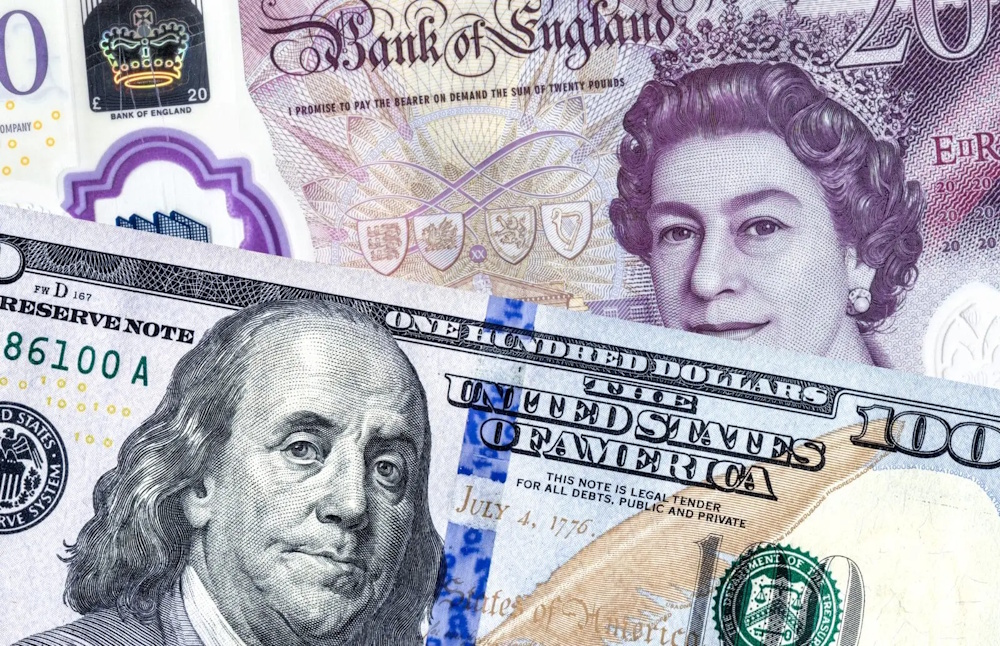
GBP/USD traded at 1.3162 on Wednesday, November 18, after experiencing a decline to 1.3148 during the London session. That low was 11 pips above the year-to-date low of 1.3137. The pair commenced trading at 1.3207, reached a peak of 1.3211, and subsequently declined past Tuesday’s one-month low of 1.3169 following the release of the October UK inflation report. Tuesday’s gain dissipated within a mere three hours. Over the past six sessions, sterling has decreased from the high of 1.3355 on November 11 to 1.3148, marking a decline of 207 pips. The extended decline is of greater importance. GBP/USD was at 1.3516 on September 1. The 2026 range spans from 1.3137 to 1.3867, while the 52-week range extends from 1.3037 to 1.3869. At 1.3162, the pair is positioned 705 pips, or 5.1%, below its annual peak and is situated within the lowest 4% of its 2026 range. The daily closes this week demonstrate the following sequence: 1.3211 on Friday, November 13, succeeded by 1.3185 on Monday, a 0.15% rise to 1.3205 on Tuesday, and then a decrease on Wednesday. The only day of gains in six sessions was reversed the next morning.
The thesis for this forecast posits that the UK inflation report has undermined the pound’s primary support at an inopportune moment. Sterling demonstrated resilience as markets anticipated that the Bank of England would maintain its course of rate increases following its initial hike in over three years earlier this month, which raised the Bank Rate to 4%. October CPI increased to 3.6%, marking the highest level in a year. This figure aligned with forecasts and fell short of the Bank’s own projection of 3.7%. Core inflation held firm at 2.8%, whereas services inflation was recorded at 3.7%, with both metrics underperforming the consensus estimate of 3.8%. Markets have decreased the likelihood of a December rate hike to 80%, a decline from the earlier 90% estimate. When the primary rationale for sustaining a currency’s strength wanes, the currency experiences depreciation, and the pound has indeed fallen.
On the U.S. side, the conditions appear to be unfavourable for sterling. The dollar index rose by 0.2% to 103.74, nearing its 19-month high. Markets are presently indicating a 97.8% probability of a Federal Reserve interest rate increase on December 9, alongside expectations for additional hikes in January and another projected for April. The minutes from the Federal Reserve’s meeting conducted on October 27-28 are scheduled for release on Wednesday at 19:00. The Bank of England seems to have taken a more measured approach in light of the CPI data, while the Federal Reserve is expected to proceed with rate increases in its next two meetings. That gap is pushing GBP/USD nearer to its lows. The levels are clearly delineated. Support commences at 1.3148, the low recorded on Wednesday, succeeded by 1.3137, which signifies the low for 2026. Below that are 1.3100, 1.3090, and 1.3037, the 52-week low. Resistance is established at 1.3169-1.3172, the prior one-month low that now acts as a barrier, succeeded by 1.3208-1.3211, aligning with Wednesday’s opening and peak, then 1.3227, mirroring Tuesday’s high, and ultimately 1.3244-1.3252, which delineates the current trend.
The upside target is 1.3300, indicating a rise of 138 pips or 1.05% from the present price. It requires a daily close above 1.3252. The Office for National Statistics reported that UK consumer prices rose 3.6% in the 12 months to October, an increase from 3.5% in September, marking the highest reading in a year. The headline figure was consistent with the median forecast in economist surveys; however, it did not meet the 3.7% projection set by the Bank of England during its recent rate hike. On a monthly basis, the Consumer Price Index experienced an increase of 0.5%, compared to a rise of 0.4% during the corresponding period last year. CPIH, which includes owner-occupiers’ housing costs, rose to 3.7% from 3.6%. The details elucidate why markets perceived the report as less robust than the headline indicated. Fuel was the main catalyst for the rise. Diesel rose by 7.0 pence, reaching 199.5 pence per litre, which represents a record high since the ONS began its tracking in January 1996. Petrol prices rose by 5.2 pence, now standing at 174.7 pence per litre, which represents the peak level since 2022.
Motor fuel prices have risen by 33.2% relative to the same period last year. Transport inflation rose to 7.5%, an increase from the previous rate of 6.6%. Inflation for alcohol and tobacco has risen to 4.5%, a significant uptick from the prior rate of 2.5%, subsequent to the tobacco duty increase that took effect on October 1. In a mere span of one month, there was an observed increase in tobacco prices amounting to 5.2%. The core measures exhibited stability. Core CPI, excluding energy, food, alcohol, and tobacco, held steady at 2.8%, consistent with forecasts. Services inflation, the metric that the Bank monitors most attentively for domestic price pressures, held steady at 3.7%, diverging from forecasts that had anticipated an increase to 3.8%. Food inflation has declined to 0.9%, a reduction from the previous rate of 1.3%. Goods inflation rose to 3.5% from 3.2%, largely influenced by an uptick in fuel prices. Core CPIH registered at 3.1%, while services CPIH stood at 3.9%. Underlying inflation did not accelerate. That is substantial for the Bank. Policymakers observe services and core inflation to evaluate the degree to which imported energy costs are affecting domestic wages and prices.
A headline increase propelled by diesel and tobacco duty exemplifies a type of supply-driven inflation that central banks often neglect to consider. If services had risen to 3.8% or core above 2.8%, the energy shock would have been permeating the broader economy, making a December hike nearly inevitable. With both remaining stable, the Bank possesses enhanced flexibility to adopt a patient approach. Market commentary suggested that the relatively weaker report diminishes the probability of a December rate hike and affords the Bank of England greater flexibility. The Bank maintains its projection for inflation to increase to approximately 5% by the second quarter of 2027, while industry forecasts anticipate a 26% rise in the January energy price cap, bringing it to £2,166 annually. Inflation persists in its ascent. October did not yield any fresh motivation for the Bank to hasten its actions, leading to the pound giving up the support it had earlier gained from expectations of swifter interest rate increases.
