
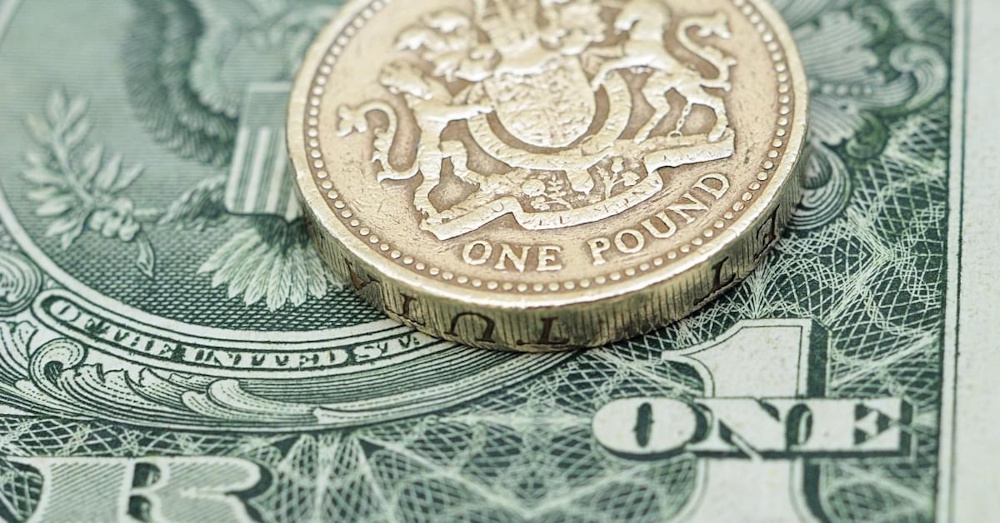
GBP/USD is fluctuating around the 1.35 level following a significant pullback from the year-to-date peak close to 1.3865. The pair momentarily dipped under 1.3450, reaching four-week lows, before finding stability as the strength of the US dollar diminished and UK data became less definitive. The current spot rate is contained within a range, facing resistance around 1.3580–1.3600 and support near 1.3445–1.3400. This situation illustrates the intersection of two weak macro narratives, rather than indicating a definitive advantage for either side of the cross. The context for GBP/USD in the UK is clearly accommodating. In January, the headline CPI decreased from 3.4% to 3.0%, approaching the 2.0% target set by the BoE and continuing the trend of disinflation. Concurrently, the unemployment rate rose to approximately 5.2%, marking the highest level in about five years, indicating a buildup of slack in the labor market instead of signs of overheating. The pace of wage growth has also slowed, with average pay growth decreasing to approximately 4.2% from 4.4% in the previous three-month period, diminishing real-income support. This mix of declining employment, reduced wage increases, and milder inflation provides the Bank of England with a distinct opportunity to implement easing measures.
Current market sentiment suggests the possibility of two rate cuts of 25 basis points each, with the first potentially occurring in March and another anticipated around July, contingent on the trajectory of economic data. The policy narrative has transitioned from questioning the duration of restrictive rates to focusing on the urgency of the BoE’s actions to prevent a more severe economic downturn. The recent repricing is precisely what caused GBP/USD to fall from the 1.38–1.39 range and below the 1.35 pivot in the latest sessions. In light of the current challenges, certain institutional forecasts continue to indicate minimal growth potential over the next year. One prominent institution anticipates GBP/USD to be approximately 1.36 by the conclusion of 2026, while another sets a 12-month target nearer to 1.40. The assumptions behind those calls suggest that US growth will align more closely with the UK, that the Fed will ultimately ease more than current pricing indicates, and that political risk in the UK will remain manageable. In the near term, the narrative shifts. The signs of weakness in the labor market and declining inflation support the notion that the Bank of England will implement cuts ahead of any significant actions from the Federal Reserve. This narrows the rate differentials between the UK and the US, favoring the dollar, and complicates the ability of GBP/USD to maintain rallies above the mid-1.35s until the Bank of England has implemented further easing measures and the macroeconomic uncertainty dissipates.
On the dollar side of GBP/USD, macro strength has become a more nuanced discussion. The annualised US GDP decreased to approximately 1.4% in Q4 2025, down from around 3.3% in Q3, indicating a notable decline in momentum. Simultaneously, the Fed’s favored measure of inflation, core PCE, continues to hover around 3.0% year-on-year, indicating that price pressures remain significantly above the 2.0% target. The combination of slower growth alongside persistent inflation leaves the Fed in a challenging position, balancing the necessity to safeguard demand while also preventing a resurgence in prices, which adds complexity to the trajectory of the dollar. The context of trade policy introduces an additional dimension. The Supreme Court invalidated the former global tariff framework, deeming it an overextension, which momentarily alleviated one aspect of tariff-induced inflation risk and provided a boost to risk assets. Shortly after, a new comprehensive 15% global tariff framework was revealed under an alternative legal foundation for a duration of 150 days, bringing back uncertainty. Markets are now compelled to account for both the tangible economic impact of increased import expenses and the surrounding legal and political uncertainties related to US trade policy. The recent uncertainty has caused the US Dollar Index to decline toward the 97.5 level; however, the currency continues to gain from sporadic safe-haven demand during times of negative risk sentiment. The tariff and geopolitical mix for GBP/USD is not linear. On one side, global tariffs and the potential for wider trade conflicts pose risks to growth, especially for open economies such as the UK and the euro area, which may limit the value of sterling. Conversely, the turmoil surrounding tariffs and discussions of restricted airstrikes on Iran are steering investors towards a more cautious stance, which has traditionally bolstered the dollar in times of reduced risk appetite.
Energy serves as the connection among these themes. Worries about the potential escalation of tensions between the US and Iran, along with possible disruptions in the Strait of Hormuz, have reignited discussions surrounding oil prices in the range of $90 to $100. Leading financial institutions have begun to adjust their crude projections, with one increasing its Q4 2026 Brent estimate from $56 to $60 and WTI from $52 to $56, while also noting a potential surplus of approximately 2.3 million bpd in 2026 if no significant disruptions occur. Currently, WTI is priced close to $67, while Brent is around $72, reflecting an increase of approximately 0.8–0.9% for the day. In the short term, higher energy prices generally bolster the dollar due to their influence on US inflation expectations and Federal Reserve policy, while simultaneously acting as a burden on real incomes in the UK, which could strengthen the downward pressure on GBP/USD if crude oil prices surge. From a technical perspective, GBP/USD continues to process a reversal from overbought conditions. The pair has declined from 1.3865 and currently trades around 1.3520–1.3530, positioned below a descending trendline established from late-January peaks. On the daily chart, the price has dipped below the 50-day moving average close to 1.3530 and is approaching the 200-day moving average around 1.3445. The current setup, with prices below both medium-term averages, indicates a corrective phase instead of a robust uptrend.
Momentum validates the strain. Both RSI and MACD have declined from earlier high points, indicating a decrease in upward momentum and an increasing tendency towards downward movement. Scotiabank identified a potential risk toward the mid-1.33s should GBP/USD decisively breach the 1.3445 level. Short-term resistance is positioned around 1.3530–1.3580, corresponding with the descending trendline and grouped moving averages; a consistent daily close above this range would be required to support a lasting bullish shift. The Dollar Index in the US is currently positioned near 97.4, trading beneath significant resistance levels around 98.0–98.1. It is also hovering around crucial Fibonacci support at approximately 97.2, with further support levels identified at 96.8 and 96.3. The flat 50-period moving average positioned beneath a persistently high 200-period suggests a mixed broader outlook, leaning away from a robust USD environment. This framework restricts the degree of sterling losses, yet it does not provide relief for GBP/USD as the market is pricing in BoE easing more assertively compared to Fed cuts.