
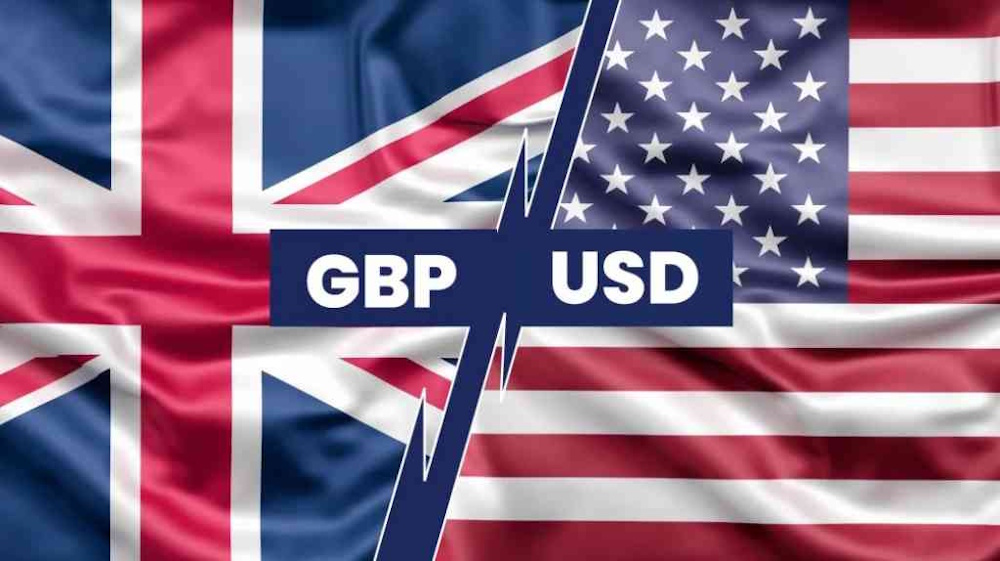
The British pound made a significant move against the 1.3600 barrier on Friday, surging from the 1.3520 area during the European morning to reach an intraday high close to 1.3595. This shift occurred as the geopolitical risk premium supporting the dollar diminished following Iran’s announcement to reopen the Strait of Hormuz. The pair concluded the day within the range of 1.3552 to 1.3555 during the New York afternoon session, maintaining significant weekly gains above the key 1.3550 level and setting the stage for a third consecutive week of strengthening against the U.S. dollar. The intraday high at 1.3595 marks the third attempt at the 1.3600 barrier this week, and the consistent rejections at that level stand out as the most critical technical observation for traders engaged with this pair at present. The Pound Sterling’s ascent from the mid-1.31s during the March sell-off to the current 1.3552 level signifies approximately 400 pips of appreciation over a span of three weeks. This movement has been primarily influenced by the reduction of the geopolitical risk premium that had been constraining risk assets amid the Iran conflict. The Dollar Index has fallen to 97.74, marking a six-week low. Earlier in the Asian session, it was trading in the range of 98.20 to 98.25. The decline of the dollar serves as the driving force, with sterling benefiting from the momentum. The overarching trend of dollar weakness is rooted in structural factors rather than tactical maneuvers.
The DXY at 97.74 indicates the lowest dollar value since February 27, and the index is on track for a third straight weekly decline. The technical framework has transitioned from a phase of constructive consolidation to one of active breakdown, with both the 50-day and 200-day moving averages positioned above. The descending trendline remains a barrier to any recovery efforts, and in the absence of a decisive move above 98.50, the dollar’s decline is expected to gain momentum towards the 97.40 area amid ongoing risk-on sentiment. The decline of the geopolitical risk premium, the adjustment of Federal Reserve rate expectations, and the widespread strength of currencies against the dollar all suggest that continued dollar weakness is the most likely scenario. The impetus for Friday’s movement originated from Iranian Foreign Minister Seyed Abbas Araghchi’s post on X, stating that the Strait of Hormuz is “completely open” to commercial vessels for the duration of the Israel-Lebanon ceasefire — a 10-day truce that commenced at 5 p.m. Thursday. President Donald Trump utilized Truth Social to express gratitude towards Tehran, subsequently issuing a stronger reminder that the U.S. naval blockade on Iranian ports is fully enforced until a comprehensive peace agreement is established. Trump made the remarkable assertion that “Iran has agreed to never close the Strait of Hormuz again.” It will no longer be used as a weapon against the World” — a statement that, if maintained, fundamentally alters the geopolitical risk premium that has influenced the global dollar trade for decades.
The president conveyed optimism regarding the U.S. being “very close to making a deal with Iran” and observed that Tehran seems more inclined to relinquish enriched uranium compared to earlier negotiation phases. The upcoming second round of U.S.-Iran discussions is anticipated to occur this weekend, possibly on Sunday in Islamabad. This negotiating session serves as a critical factor that could either drive Cable above 1.3600 decisively or lead to a significant rebound of the dollar should the talks fail. WTI crude crashed roughly 12% to $81, Brent tumbled to $88.96, and the U.S. 10-year Treasury yield collapsed 8.8 basis points to 4.232%. Fed Funds futures have adjusted the December rate-cut probabilities to approximately 50%, marking a significant change from the expectations just 48 hours prior, when the market anticipated the central bank would maintain its current stance well into 2027. The combination of lower oil prices, declining yields, and a dovish shift in Fed expectations creates significant challenges for the dollar, with the pound emerging as a key beneficiary, alongside the euro, yen, and Swiss franc. On Friday, the currency heat map indicated that the dollar declined by 0.36% against sterling, 0.33% against the euro, 0.88% against the yen, 0.58% against the Aussie, 0.47% against the kiwi, and 0.68% against the Swiss franc.
The U.S. dollar exhibited significant weakness among major currencies, while gold emerged as the sole safe-haven asset that maintained its strength, surging 1.89% to $4,899.20 as institutional investors sought to hedge against the evolving peace-deal scenario. The technical architecture on GBP/USD is currently positioned at a critical crossroads not seen in months. The pair exhibits a positive bullish outlook as it remains above the 20-day Exponential Moving Average at 1.3419 and the 50% Fibonacci retracement at 1.3513 — this 50% Fibo serves as the key near-term support level, and as long as Cable maintains a daily close above 1.3513, the bullish framework remains secure. The Relative Strength Index stands at 59.6, positioned below the overbought threshold but trending upwards, indicating that buyers maintain dominance without indicating any signs of exhaustion just yet.
