
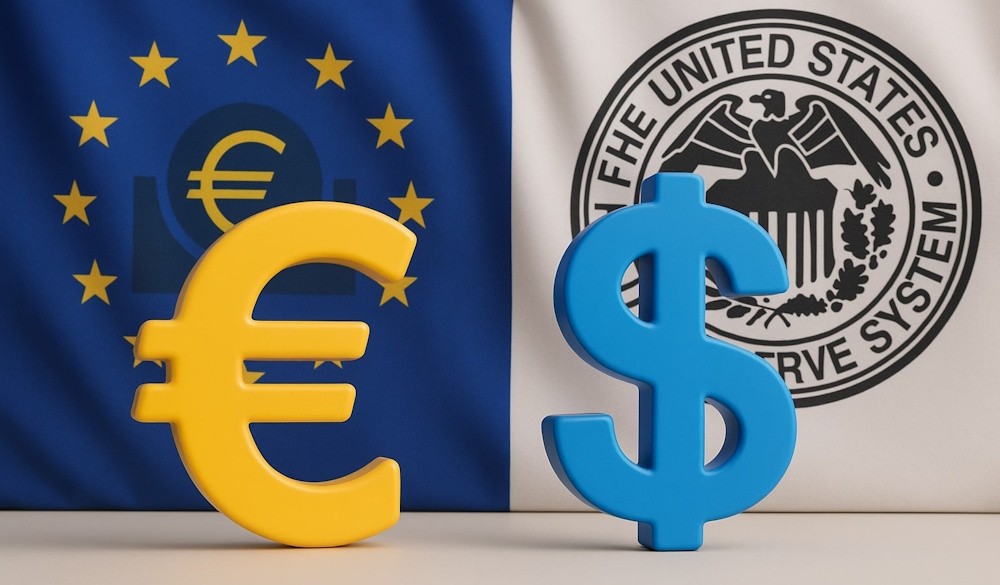
Here’s the puzzle that defines this pair right now: the European Central Bank is poised to increase interest rates, the euro’s domestic narrative has become more favourable than it has been in months, yet the currency continues to decline to new six-week lows. EUR/USD is currently trading around 1.1650, positioned at the weaker end of the range it has maintained throughout the year and trending downward as the dollar strengthens against other currencies. The reason isn’t the euro — it’s the counterpart in the pair. This situation presents a standoff between two hawkish central banks, both inclined towards tighter monetary policy. The dollar is emerging as the clear victor in this scenario, bolstered by the Gulf war that is unsettling markets, providing the greenback with a safe-haven appeal, while simultaneously imposing a significant energy burden on Europe. The euro represents the asset you liquidate when oil prices surge and global tensions rise, which is precisely the scenario traders are confronting as they approach June. Until the dollar’s war premium diminishes, every euro rally should be approached with caution, and the overall sentiment remains bearish. The price action indicates a currency confined within a range, gradually moving towards the lower boundary. EUR/USD is currently positioned near 1.1650, having retraced from its January peak of 1.2019 to examine the lower boundary of its 2026 range. The year’s low so far was 1.1435 back on March 15, and the average for the year has hovered near 1.17, indicating that the euro isn’t collapsing — it’s range-bound and positioned toward the weaker side of that band.
The pair has recently declined to a six-week low, with today’s session witnessing a rise in the dollar across the board. Fresh headlines from Iran have propelled oil prices up by approximately 3%, placing renewed pressure on the currencies of oil importers. The euro is firmly categorised as an oil-importer currency. This isn’t a crash; it’s a grind, the kind of slow bleed that occurs when a currency’s own bullish catalysts continue to be overshadowed by a more dominant counterpart. The structure is substantial, and the path of least resistance indicates a downward trend until an event disrupts the dollar’s dominance. To project the EUR/USD at this moment, one must focus solely on the dollar, period. The chain extends directly from the Persian Gulf: U.S.-Iran strikes are contributing to an increase in oil prices, which in turn is fuelling inflation. This persistent inflation is compelling the bond market to adjust its pricing for prolonged higher U.S. interest rates. The result is a combination of elevated yields and heightened safe-haven demand, leading to an appreciation of the dollar against all major pairs. The euro stands as the most significant and liquid counter-currency to the dollar. Consequently, when the greenback experiences a widespread demand, EUR/USD inevitably suffers, irrespective of developments in Frankfurt. The dollar strengthened consistently throughout May, contrary to the expectations of many forecasters who anticipated a decline. This resilience was driven by persistent U.S. inflation and an Iran ceasefire that remains perpetually promised but unsigned.
That dollar strength has pushed EUR/USD lower, even as the euro’s narrative has improved. This is the single most important aspect to grasp about this pair: the euro can perform well and still decline, as the dollar is the one in control. Geography plays a crucial role in this trade, and Europe has unfortunately found itself at a disadvantage. The eurozone stands as a significant net energy importer, acquiring energy in dollars. Consequently, an oil spike impacts the bloc in two ways: first, through an increased import bill that hampers growth, and second, via a stronger dollar that elevates the cost of each barrel in euro terms. The United States stands in stark contrast, moving significantly towards energy self-sufficiency while also benefiting from safe-haven inflows. Consequently, the crude rally that adversely affects the euro serves to bolster the dollar. Europe is expected to continue experiencing the residual impacts of the recent energy shock for several months. This ongoing situation creates a limitation on any potential short-term gains for the euro, even as the technical indicators attempt to recover. This asymmetry is the reason the war presents a double negative for EUR/USD: it bolsters the dollar via the rate-and-haven channel while simultaneously undermining the euro through the energy-import channel. The pair is being pressured from both sides.
The most counterintuitive aspect of the situation is that the euro’s most significant bullish catalyst is approaching, yet the currency is unable to take advantage of it. The June 11 ECB meeting stands as the most significant immediate factor influencing the euro, with the market currently assigning a 90% probability to a 25-basis-point increase. In a typical scenario, a highly anticipated rate hike from a significant central bank would lead to a substantial appreciation of its currency leading up to the decision. Instead, the euro declined to a six-week low in anticipation of it. That indicates the current power dynamics in this pair — the dollar’s war-and-inflation appeal is sufficiently robust to counteract a hawkish ECB. A hike on June 11 is expected to establish a support level for the euro and reduce the interest rate differential that has benefited the dollar. However, the current price action suggests that traders are unlikely to respond positively to the euro until the uncertainties surrounding oil and Iran are resolved. The catalyst is indeed present; however, the market seems reluctant to assign value to it as the dollar maintains its dominance.
The Strait of Hormuz serves as a critical control point for this market. As long as that chokepoint remains effectively closed and oil prices remain high, the near-term outlook for EUR/USD is skewed towards a decline, and this assessment is based on structural factors rather than technical analysis. The market has faced significant setbacks due to premature optimism on multiple occasions. President Trump indicated that negotiations with Tehran were progressing well and that the naval blockade would be lifted without delay. However, none of these developments materialised, resulting in traders feeling misled, while Israel conducted strikes in southern Lebanon, raising new uncertainties regarding the ceasefire. Each false dawn has resulted in a temporary euro bounce that quickly dissipated. The lesson the market has learned is to fade headlines until there’s ink on paper. Any meaningful progress toward a temporary deal provides only limited support to EUR/USD until oil experiences a significant decline. Clearing the crucial 1.1800 resistance will almost certainly necessitate a confirmed, signed agreement between the two parties rather than yet another series of promises.
