
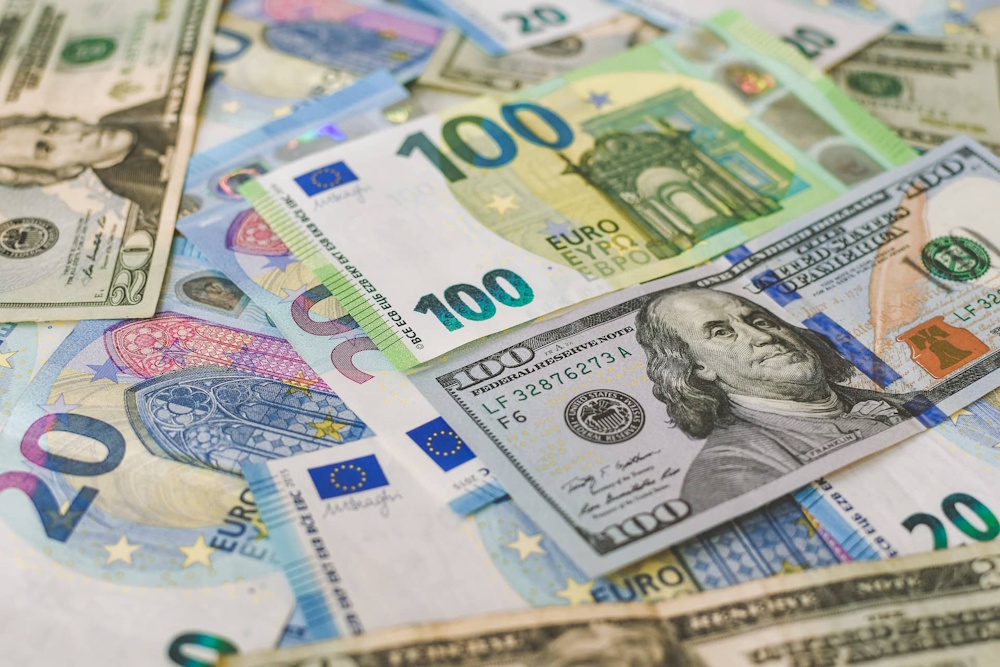
The EUR/USD is currently at 1.1448, reflecting an increase of 0.13% over the past week, while showing a decline of 1.39% over the last thirty days. The pair has appreciated since Monday, yet it has shown no increase since January. The recent trajectory reflects a succession of unsuccessful attempts. On July 12, the pair was positioned at 1.1416. On July 13, it printed 1.14083, recovering from a session low near 1.1380 following the prior week’s decline. On July 14, the euro rose to 1.145, marking its highest point since June 19, driven by widespread dollar weakness following US inflation data that fell short of expectations. On July 15, it increased to 1.1431, reflecting a rise of 0.10%. Today it stands at 1.1448. Four sessions. Eighty-five pips of range. No advancement has been observed. The frame that matters: the euro reached 1.2016 on January 27, 2026. At 1.1448, the pair is positioned 4.91% beneath that peak and has experienced a decline of 1.75% over the past twelve months. It has faced challenges in maintaining a position above 1.15 for the majority of the year, and this resistance level is not coincidental — it reflects the practical implications of a 125 to 150 basis point interest rate differential favouring the dollar. That constitutes the central argument. EUR/USD is not primarily about the euro and has not been characterised as such throughout the year. It is a narrative from the Federal Reserve that persists despite the European Central Bank’s initial rate increase in three years, which did not manage to mitigate the carry disadvantage. Both central banks are currently tightening, which stabilises the pair rather than allowing it to trend. Bank targets clustered at 1.22-1.25 rest on a cutting Fed and an ECB parked at 2.00% — assumptions events have already overtaken.
The dollar side is performing the necessary functions. The dollar index increased to 100.6232 on July 16, reflecting a rise of 0.14% from the prior session, a strengthening of 0.53% over the past month, and an appreciation of 1.91% over the course of twelve months. It experienced a rebound following declines in the preceding two sessions, as new data indicated ongoing resilience in the US economy: retail sales met expectations, and initial jobless claims fell to a two-month low of 208,000. The euro experienced a movement of 0.13% over the course of a week, whereas the dollar index recorded a change of 0.53% within a month. One of those two currencies is currently being priced. It is not the euro. The Federal Reserve’s policy rate currently ranges between 3.50% and 3.75%. The deposit rate set by the European Central Bank currently stands at 2.25%. That spread operates within a range of 125 to 150 basis points in favour of the dollar, resulting in capital migrating towards the higher yield. Until that gap narrows, the euro’s potential for appreciation remains limited. Not limited — capped. It is a matter of arithmetic, not sentiment. Execute the operational procedures. A dollar-denominated holder earning 3.75% has no incentive to finance a euro position yielding 2.25% unless the currency appreciates sufficiently to offset the 150 basis point annual carry cost. At 1.1448, that necessitates EUR/USD to attain approximately 1.1620 within a twelve-month horizon merely to achieve parity with cash holdings. Every forecast below that number presents a case for shorting the euro, with one-year projections converging around 1.1427 and 1.1518.
Both of those are below breakeven. The gap elucidates the reason behind the ineffectiveness of the June ECB hike. The ECB raised its deposit rate to 2.25% on June 11, 2026 — marking its first increase since 2023 — in response to eurozone inflation reaching 3.2%. That would typically elevate a currency. The EUR/USD pair softened to approximately 1.143, as the Federal Reserve’s hawkish stance and the dollar’s interest rate advantage dominated market dynamics. A 25 basis point increase in the context of a 175 basis point starting deficit effectively addresses 14% of the gap. The market assessed it as mere noise, and rightly so. The composition of the dollar index creates a circular dynamic that many desks tend to underweight. The euro constitutes 57.6% of the DXY basket, with the yen accounting for 13.6%, sterling at 11.9%, the Canadian dollar at 9.1%, the Swedish krona at 4.2%, and the Swiss franc at 3.6%. When engaging in EUR/USD transactions, one is effectively trading 57.6% of the dollar index against its own value. There exists no distinct euro indicator within the DXY; rather, the DXY can be viewed as the euro, adorned with a collection of other currencies. The dollar surpassed the 100 mark, reaching approximately 100.7 — its peak since May 2025 — following the Federal Reserve’s decision to maintain the rate at 3.50%-3.75% on June 17, while indicating potential increases in the future. It ascended past 100 following a four-year low established in early 2026. That reversal off a four-year low represents the year’s most significant foreign exchange development, occurring as a result of the Fed halting its rate cuts.
The June 11 hike was anticipated to mark a pivotal shift. It marked the European Central Bank’s inaugural tightening action in three years, implemented against a backdrop of eurozone inflation at 3.2%. This decision was characterised as the juncture at which the rate differential began to narrow. The euro is currently at a lower value compared to its previous standing. The rationale behind the hike stems from its characterisation as a reaction to an energy shock, rather than a response to demand dynamics. The ECB raised rates due to Iran-driven crude prices elevating headline inflation to 3.2%. Energy-driven inflation represents a challenge that a central bank cannot rectify and prefers not to pursue aggressively. The Governing Council is aware of it. That is the reason the anticipated follow-through did not materialise. Examine the statements made by the doves in the immediate aftermath. Piero Cipollone and Martin Kocher expressed a measured outlook, noting the absence of definitive signs of second-round inflation effects at this time. Bundesbank President Joachim Nagel indicated that there is no pressing necessity for an additional rate hike at the July meeting. Policymakers adopted a cautious yet vigilant stance: the June hike contributed to mitigating inflation risks, and there is scant evidence of wider second-round effects stemming from elevated energy prices.
Three distinct policymakers, including the Bundesbank, articulating a unified message. That committee does not exhibit hawkish tendencies. That committee raised rates once for the sake of appearances and is now reluctant to repeat the action. The market experienced a temporary reversal in direction. Money markets have adjusted to fully incorporate a September increase, projecting the deposit rate to rise to 2.70% by December, an increase from the current 2.25%. Furthermore, another increase is anticipated by spring 2027. That repricing is what propelled EUR/USD from its June lows toward 1.145. The rebound has been propelled more by speculation regarding a potential rate hike by the ECB in September than by the strength of the euro. The pricing, rather than the currency, was the driving force behind the outcome. And the pricing is currently unwinding. Markets assign a probability of approximately 50% to each outcome. The three key rates are anticipated to remain at June levels throughout July, with policy direction influenced by forthcoming HICP data, wage trends, and metrics of monetary transmission — including credit, deposit flows, and market functioning. That is data-dependent language, which in central-bank parlance signifies: we are not making any commitments.
In June, inflation within the euro area decreased to 2.8%, down from 3.2% in May. That single print represents the most detrimental development for the euro this quarter, and it has scarcely been factored into the price. The ECB raised rates on June 11 in response to energy-driven inflation running at 3.2%. Inflation has decreased by 40 basis points to 2.8%, while energy inflation shows signs of deceleration. The entire rationale for the June hike has diminished, indicating that the rationale for a September hike has diminished even further. The euro’s hawkish moment has concluded. Reassess the valuation transparently. Eurozone inflation, currently at 2.8%, is positioned close to the ECB’s target of 2%. The US Consumer Price Index stands at 3.5% year over year, while the core CPI is recorded at 2.6%, indicating a differential of 70 basis points between the two metrics. The economy experiencing lower inflation challenges is the one whose currency is anticipated to appreciate in response to tightening expectations. That is ineffective. The energy channel that propelled the June increase is the identical channel currently undergoing a reversal. Brent is currently priced at $84.63, reflecting a 6.39% increase over the past month, amid ongoing tensions between the US and Iran. However, the June eurozone data has already reflected the energy pass-through, and inflation declined regardless.
If a 6.39% monthly move in crude cannot arrest a 40 basis point decline in euro area inflation, the second-round effects Cipollone and Kocher say they cannot find are unlikely to materialise before September. For additional ECB tightening, eurozone inflation must rise again from 2.8%. Current data does not support the argument that it will. The context that exacerbates this situation is the expectation of rates remaining stable and inflation hovering slightly above target for 2026. As a result, the euro experiences two-way volatility: it may appreciate if euro-area data surprises positively or if US data shows relative weakness. However, there is limited potential for unilateral appreciation due to the presence of symmetric policy risks. Limited unilateral appreciation. That is the analytical perspective indicating that the euro lacks the capacity to strengthen based solely on its inherent qualities. It can only rally if the dollar experiences a decline. Which brings every EUR/USD forecast back to Washington, where it has resided throughout the year.
