
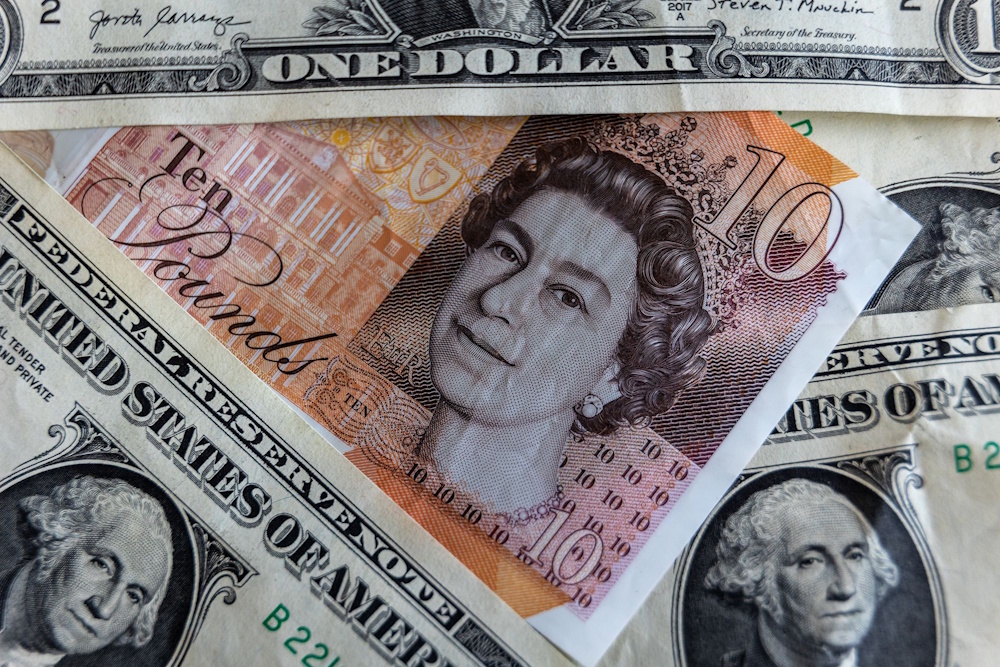
The pound slid to a two-month low against the dollar Thursday, trading near $1.33 after the Bank of England held rates as expected but failed to lift sterling in the face of a resurgent greenback. The session concluded a challenging 48 hours for cable, as the currency was initially pressured lower by a hawkish Federal Reserve signalling potential rate hikes and a strengthening dollar. Subsequently, a decision from the Bank of England, despite a more hawkish vote split, failed to counteract the prevailing strength of the dollar. GBP/USD currently stands at its lowest point since early April, having relinquished the gains that had propelled it toward $1.342 earlier in the week. The narrative surrounding the decline of cable fundamentally revolves around the divergence in monetary policy. Both central banks maintained their rates this week; however, the divergence in their projections and tone has shifted significantly in favour of the dollar. The Federal Reserve’s dot plot indicates that approximately half of the committee members expect an interest rate increase before the end of the year, which propelled the dollar index to a multi-month peak and raised Treasury yields. In contrast, the Bank of England’s decision to maintain its current stance, despite dissent from two members advocating for a hike, was eclipsed by a disappointing UK inflation report and a measured outlook from Governor Andrew Bailey. The disparity between the Fed’s indications and the BoE’s actions is exactly what has contributed to the decline of sterling.
However, the situation is not entirely unidimensional. The Bank of England’s vote split has shifted towards a more hawkish stance compared to the previous meeting, with two members now supporting a rate increase. The UK has experienced a significant policy reversal, transitioning from expectations of cuts at the beginning of the year to discussions of hikes. This development has introduced a hawkish tail risk for the pound that was absent just months ago. Cable enters the long holiday weekend — with US markets closed Friday for Juneteenth — positioned at a two-month low, constrained by a newly hawkish Fed bolstering the dollar and a Bank of England that is also leaning toward tightening. The inquiry for traders revolves around the potential impact of the dollar’s strength on the pound, specifically whether it will lead the currency towards its 2026 lows. Alternatively, there is the consideration of whether the Bank of England’s hawkish stance, coupled with a potential softening of the dollar later in the year, could facilitate a revival in sterling’s recovery. The figures delineate the transition. GBP/USD traded around $1.33 on Thursday, following a decline to a two-month low near $1.3260 after the decisions from the Fed and BoE, before experiencing a slight stabilisation. The pair had been trading near $1.342 ahead of the Fed meeting, supported by a softer dollar and the risk-on impulse from the US-Iran peace deal, so the slide to $1.33 represents a meaningful reversal driven by the dollar’s resurgence. The decline positions cable at its most vulnerable level since the beginning of April.
The strength of the dollar is the prevailing factor driving this movement. The US Dollar Index ascended to a two-month peak close to 100.57 in the wake of a hawkish Federal Reserve, surpassing significant resistance levels and trading above its upward trendline and principal moving averages, bolstered by strong momentum. A stark divergence in monetary policy between the Fed and the Bank of England, with the Fed appearing more committed to fighting inflation, has driven the dollar higher against the pound and sent cable to its lows. The greenback’s extensive rally has eclipsed sterling’s inherent supports. Context shapes the gravity of the action. GBP/USD is currently positioned significantly lower than its 2026 peaks around $1.38, which were attained in January. The pair has retraced a substantial portion of the gains that had propelled it from a low of approximately $1.3182 recorded at the end of March. The pair spent the spring climbing on a softer-dollar narrative, supported by expectations of Fed easing and questions about US fiscal policy; however, the hawkish Fed turn has reversed that dynamic. The pound currently resides beneath its 50-day and 200-day moving averages, indicating a technically bearish setup that underscores the dollar’s resurgence in dominance. Maintaining a position above the $1.3260 two-month low is the pressing technical consideration, as a breach of this level would reveal the March low around $1.3182 and indicate that the dollar’s recovery has additional momentum to pursue.
The domestic catalyst for cable was the Bank of England’s policy decision, which delivered the widely expected hold but with a notable shift in the internal dynamics. The Monetary Policy Committee maintained the Bank Rate at 3.75% for the fourth consecutive meeting, a decision that was fully anticipated by the markets. The unexpected element, if one could be identified, was the division of votes, which shifted to a more hawkish stance compared to the previous meeting. The committee voted seven to two to maintain the current rate, with two members — the chief economist and an external member — supporting a quarter-point increase to 4%. That signifies a transition from the prior meeting’s eight-to-one division, in which only one member expressed dissent in support of an increase. The increasing dissent indicates a deepening internal discourse at the Bank, as a more substantial group now contends that the risks associated with inflation necessitate a tightening approach. In typical scenarios, a more hawkish vote split would bolster the currency, as it enhances the likelihood of forthcoming rate hikes that would draw capital to sterling.
The market’s reaction, however, was subdued on the pound side as the hawkish division was eclipsed by the overarching strength of the dollar and the prudent tone emanating from the Bank’s leadership. The committee weighed the indications of easing inflation against the persistent uncertainty regarding the economic ramifications of the Middle East conflict. It observed that labour market conditions were continuing to loosen, while also cautioning that rising energy prices could translate into wage increases and broader inflationary pressures. The hold itself was anticipated and largely factored into market expectations, thus the decision did not serve as the positive catalyst necessary to elevate sterling in the face of a strengthening dollar. The more hawkish split represents a significant development that introduces a tail risk to the upside for the pound; however, on the day, it was insufficient to counteract the dollar’s momentum, resulting in cable remaining anchored near its two-month low.
Governor Andrew Bailey’s commentary accompanying the decision underscored the prudent, wait-and-see approach that has defined the Bank’s recent position. Bailey expressed satisfaction with maintaining current rates, suggesting that an immediate adjustment in either direction is not justified as the committee evaluates the changing circumstances. His framing highlighted the ambiguity introduced by the Middle East conflict and its influence on energy prices, which has muddled the inflation outlook in both directions. The governor’s remarks underscored the fundamental tension confronting the Bank. He observed that the risks associated with inflation and interest rates were skewed towards the upside, as indicated by the ascending trajectory of the sterling yield curve, which he described as being influenced more by risk premia than by anticipated rate adjustments. This acknowledgement of upside inflation risk is hawkish in tone, indicating that the Bank is vigilant regarding the potential necessity for tightening. Simultaneously, Bailey pledged to react swiftly should indications arise that a prolonged phase of high energy prices is generating more pronounced second-round impacts on wages and general prices, a conditional hawkish position that maintains the possibility of interest rate increases.
This balancing act illustrates the Bank’s challenging position. It is essential to consider the disinflationary signal stemming from the decline in headline inflation in juxtaposition with the potential for lasting inflationary pressure resulting from the energy shock linked to the Middle East conflict, particularly in the context of the UK economy, which is currently experiencing sluggish growth and a loosening labour market. The Bank’s strategy has been to await additional data prior to making a definitive commitment, a position that results in sterling lacking a distinct catalyst. For the pound, Bailey’s commentary was sufficiently hawkish to maintain the possibility of interest rate hikes, yet it was also cautious enough to refrain from delivering the unequivocal bullish signal that might have strengthened the currency against the robust dollar. The result was a pound that remained close to its lows, with the Bank’s measured neutrality providing neither a significant boost nor a pronounced additional obstacle.
