
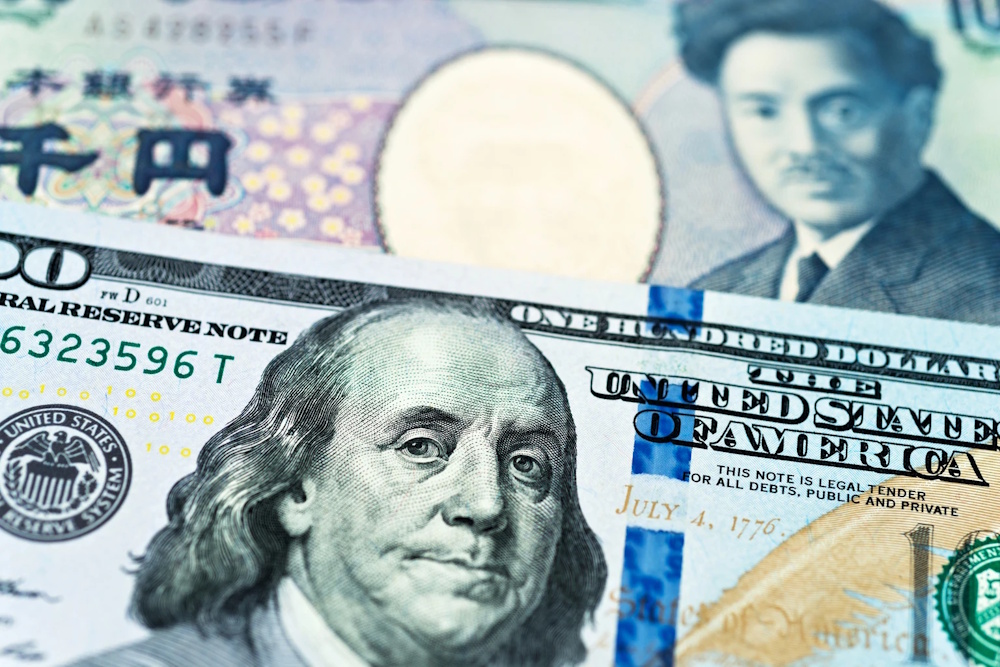
USD/JPY is trading around 162.5 on Thursday, keeping the Japanese yen close to a 40-year low as the renewed U.S.-Iran conflict drives oil prices higher and adds fresh pressure to Japan’s oil-dependent economy. The pair hovers just shy of its multi-decade peak at 162.84, having increased approximately 11% over the past year. This week’s upward movement can be attributed to a specific catalyst: the U.S. military’s confirmation of strikes on Iran for a second consecutive day, coupled with Tehran’s threats of significant retaliation against American bases throughout the region. The ensuing surge in oil prices has impacted the yen from multiple angles. Traders maintained their bearish positions on the yen, reflecting a lack of intervention from Japanese authorities, even in the face of multiple warnings from Tokyo. The structural force behind the move is the most significant U.S.-Japan interest-rate gap observed in years. The Federal Reserve, led by Chair Kevin Warsh, has adopted a hawkish stance, maintaining rates in the range of 3.50% to 3.75%, with a dot plot indicating a potential increase. In contrast, the Bank of Japan remains at a lower rate of 0.75%, following its December adjustment from 0.5%. That divergence has propelled the U.S.-Japan 2-year yield spread to exceed 280 basis points in favour of the dollar, marking the most significant differential since the onset of the Iran conflict. Furthermore, the correlation between USD/JPY and that yield spread has intensified swiftly following the June FOMC meeting. The yen, traditionally regarded as a funding currency for carry trades, lacks any substantial defence against a rate gap of this magnitude.
That establishes the thesis: USD/JPY is positioned at a 40-year high due to the persistent structural rate gap that continues to overshadow all measures implemented by Tokyo, while the Iran oil shock has further exacerbated the yen’s situation. The yen finds itself constrained, as the disparity in interest rates exerts downward pressure. The oil shock adversely affects Japan’s energy-dependent economy, simultaneously enhancing the dollar’s appeal as a safe haven. The sole mitigating factor, intervention by the Bank of Japan and the Ministry of Finance, has consistently demonstrated its ability to decelerate but not to reverse the prevailing trend, as such interventions contradict underlying economic fundamentals. The indication occurred on July 2, marked by a pronounced spike suspected to be linked to intervention, which buyers promptly retraced back toward 162.5. The entire pair distils to a singular inquiry: is there anything that can halt USD/JPY without a shift in the U.S. rates outlook? At this juncture, the response is negative. The bracket extends from 162.84 upwards to 166, and from 160.73 downwards to 157.92, maintaining the trend until a Federal Reserve pivot disrupts it. The primary reality concerning USD/JPY is that the upward trend persists until there is a shift in the U.S. rates outlook, with all other factors merely serving as background noise to this fundamental truth. The yen’s weakness is being driven less by speculative pressure and more by a powerful structural force: the wide US-Japan rate gap. That framing is crucial to the entire forecast, as it indicates that the typical yen-supportive factors—intervention threats, BOJ hawkish signals, and Japan’s improving wage data—cannot alter the trend as long as the rate differential remains substantial. The pair represents a clear manifestation of differences in monetary policy, and it is solely a shift in that divergence that results in a lasting change.
The explanation is fundamentally mechanical. With the Fed at 3.50% to 3.75% and signalling a possible hike, and the BOJ at just 0.75%, the yield gap creates significant profitability in holding dollars against yen through the carry, leading to capital flows toward the higher-yielding dollar. Until the US side of the equation begins to show signs of weakness and markets start to speculate whether the next Federal Reserve action is more inclined towards a cut rather than a hike, it is challenging to envision any factors exerting a sustained influence on the pair. The fundamental and technical backdrop continues to favour further upside precisely because the rate gap remains the dominant force, and it is not narrowing. This is the reason intervention continues to falter and why the yen persists in its decline, notwithstanding Tokyo’s admonitions. Intervening in this environment contradicts fundamental principles, thus even when the BOJ acts on behalf of the Ministry of Finance, the effect is confined to merely decelerating the rate of depreciation rather than halting it. For the forecast, the framing of a Fed pivot is crucial: the trade is fundamentally bullish for USD/JPY, limited solely by the risk of intervention, and the trend shifts only when the market begins to price in a Fed cut instead of a hike. The Iran oil shock reinforces this dynamic by maintaining a hawkish stance from the Fed, as elevated oil prices lead to increased inflation, prompting the Fed to remain tight, thereby sustaining the rate differential. Until the outlook for U.S. rates shifts, USD/JPY continues its ascent toward its multi-decade high and beyond, with each dip driven by intervention presenting an opportunity for bulls to enter the market. The yen’s fate is determined in Washington, rather than in Tokyo.
The structural engine driving USD/JPY is the U.S.-Japan interest-rate differential, which has widened to a level that renders yen strength nearly impossible. The U.S.-Japan 2-year yield spread has expanded to over 280 basis points favouring the dollar, marking the most significant differential since the onset of the U.S.-Iran conflict. Additionally, Fed funds futures suggest a tightening of 48 basis points by the middle of next year. The spread represents the most significant influence in the pair, and its expansion since the June FOMC meeting is exactly the reason USD/JPY has reached a 40-year peak. As the yield gap expands, the carry trade gains appeal, leading to a depreciation of the yen. The driver on the U.S. side is the hawkish Warsh Federal Reserve. Kevin Warsh assumed the role of Fed chair in May 2026, and his inaugural meeting marked a notable hawkish pivot: the Fed maintained its rate at 3.50% to 3.75% while eliminating its easing bias and released a dot plot indicating a year-end rate approaching 3.8%, suggesting a potential increase. The June FOMC minutes, pertaining to Warsh’s inaugural meeting, present a significant potential for volatility as they may disclose the committee’s assessment of inflation risks in relation to the labour market. A hawkish Federal Reserve maintains elevated U.S. yields and a wide rate gap.
The driver on the Japan side is a BOJ that has increased rates but continues to exercise caution. The Bank of Japan raised its rate from 0.5% to 0.75% in December 2025, positioning itself among the few major central banks that are tightening monetary policy, while markets are anticipating nearly another full hike by the end of the year. However, at 0.75%, the Bank of Japan’s rate remains a small fraction of the Federal Reserve’s, indicating that even ongoing tightening measures in Japan have minimal impact on the interest rate differential. For the forecast, the rate gap serves as the structural anchor of the bullish USD/JPY trend: at more than 280 basis points and widening, it eclipses every yen-supportive factor and propels the pair to 40-year highs. The gap narrows solely under the condition that the Fed adopts a dovish stance or the BOJ shifts significantly towards a hawkish approach, and neither scenario is currently unfolding. The Iran oil shock, by maintaining the Fed’s emphasis on inflation, accentuates the considerable disparity. Until the differential narrows, the yen lacks fundamental support, and the rate gap maintains USD/JPY at elevated levels. The Iran conflict has introduced a new bearish pressure on the yen, impacting Japan’s currency from two distinct angles simultaneously. Japan imports the vast majority of its energy and is significantly reliant on Middle Eastern oil. Consequently, the resurgence of the U.S.-Iran conflict, which led to an increase in oil prices, exerted direct pressure on Japan’s oil-dependent economy and its currency. Rising oil prices exacerbate Japan’s trade balance, as the nation incurs increased costs for its energy imports. Additionally, these elevated prices contribute to inflationary pressures in Japan, driven by higher energy expenses, thereby straining the economy. The oil shock represents a significant challenge to the underlying fundamentals of the yen.
The second impact arises from the dollar’s status as a safe haven. The yen weakened toward 162.5 as the U.S. dollar strengthened due to renewed safe-haven demand following recent U.S. air strikes on Iran. This situation illustrates how the ongoing conflict not only raises Japan’s import costs but also enhances the value of the dollar against which the yen is evaluated. In periods characterised by risk aversion, capital tends to gravitate towards the dollar, which serves as the global reserve currency. Although the yen has traditionally been viewed as a safe haven, its current weakness at a 40-year low, coupled with the significant interest rate differential, has diminished its appeal, thereby positioning the dollar as the primary beneficiary. Thus, the oil shock elevates the dollar while concurrently diminishing the yen. The compounding effect is what renders the oil shock particularly detrimental to the yen. A nation that relies heavily on energy imports confronts a deteriorating trade balance and escalating inflation in the wake of surging oil prices, both of which exert downward pressure on the yen. Additionally, the geopolitical risks prompt capital to flow into the dollar, further contributing to the yen’s weakness.
The escalation has led to an increase in oil prices, which has reignited concerns regarding inflation and exerted additional pressure on Japan’s economy and currency. In the current forecast, the oil shock serves as the catalyst that has propelled USD/JPY to its multi-decade high this week. It strengthens the rate differential by maintaining the Federal Reserve’s hawkish stance on inflation, directly deteriorates Japan’s economic fundamentals via the increased import bill, and enhances the dollar’s attractiveness as a safe haven. The oil shock presents a particularly adverse scenario for the yen, as Japan’s reliance on energy transforms a global phenomenon into a distinct vulnerability for the nation. As long as the Iran conflict keeps oil elevated, the yen faces this triple pressure, and it is a key reason the pair is testing 162.84. A de-escalation that lowers oil would relieve one of the three pressures, but the rate gap would remain.
