
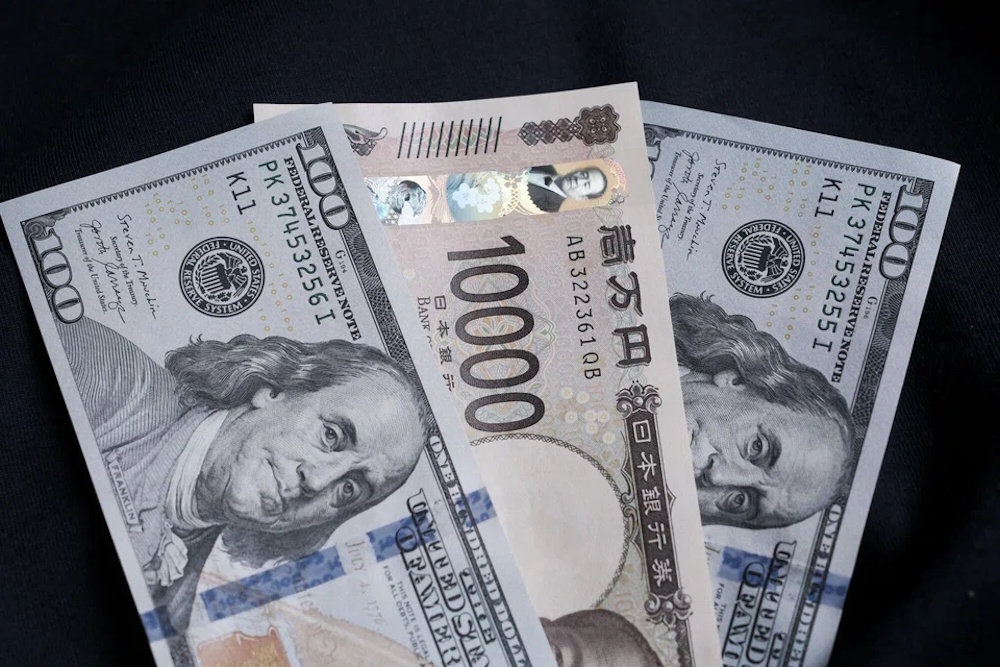
USD/JPY has breached the support area around 155.15, reaching fresh six-month lows near 154.00 on Monday, September 7, 2026. This movement accelerates a decline that has brought the pair to its lowest level since late February. The yen resumed its upward trajectory as the implications of a robust US payrolls report became clearer, while Japanese officials suggested a potential acceleration in the Bank of Japan’s tightening measures. The pair traded at 155.60 earlier in the session before the break, and sat around 156.00 at the start of the week with a four-month low of 155.23 behind it. That low is now a thing of the past. The closure of US equity and bond markets for Labour Day results in reduced liquidity, thereby exacerbating fluctuations in a pair that is already experiencing a significant decline.
The thesis for this forecast posits that the market has ceased its focus on the Federal Reserve and has redirected its attention toward the Bank of Japan, indicating that this shift is structural rather than tactical. For four years, the USD/JPY exchange rate has exhibited a direct correlation with American interest rates. It is now a two-sided trade, and the side that has remained inactive since 2024 has become active. The evidence is reflected in the price. The yen strengthened sharply from the 160 level on September 2 all the way to 155.30 – a five big-figure move – driven by a hawkish shift in Bank of Japan rhetoric rather than anything from Washington. A significant decline of 500 pips transpired between Wednesday and Thursday alone. What produced it: board member Hajime Takata, one of the BoJ’s most hawkish voices, delivered a speech suggesting the possibility of a significant interest rate increase, as well as consecutive hikes. The policy meeting is scheduled for September 17-18, with a consensus among economists leaning toward a 25 basis point increase, while a 50 basis point adjustment remains a possibility.
Then arrived the confirmation that held greater significance. Takuji Aida, economic adviser to Prime Minister Takaichi and a prominent critic of Bank of Japan rate increases, now anticipates a hike at the September meeting, followed by another in January. When the loudest dove flips, the repricing is not a positioning squeeze. It represents a shift in governance. The technical damage is significant. Monday’s break breached the neckline of a bearish head-and-shoulders pattern on the daily chart, indicating a measured target around 149.60. Friday’s US August CPI represents the sole barrier to reaching that level. The velocity of last week’s movement is what distinguishes this from earlier yen rallies. On September 2, the USD/JPY exchange rate was positioned at 160. By overnight Thursday, it had reached 155.30, marking a significant five big-figure movement within a span of 48 hours. The majority of it – approximately 500 pips – transpired between Wednesday and Thursday. On Thursday, the yen surged over 2% against the dollar, reaching a peak of 155.28, marking its strongest position since August 3.
That August 3 reference is significant, as it originates from a period shortly after the United States and Japan executed a coordinated intervention to bolster the faltering Japanese currency on July 31. Friday witnessed a partial reversal. The pair rebounded from lows in the 155.30 range, rising above 156.00; however, the momentum to the upside appeared to be limited. The yen remains poised for its most robust weekly performance since the coordinated intervention in July. Monday negated the previous rebound and further extended the trajectory. The market engaged in extensive discussions over the weekend regarding the factors that led to a 500-pip decline. Analysts observed that the motivations behind the recent moves remain somewhat ambiguous, indicating that the Bank of Japan’s current account data for Wednesday does not imply that intervention was the catalyst. Instead, they attribute the developments to a more general weakness of the dollar alongside the prevailing policy environment.
That distinction is essential for making accurate predictions. Intervention-driven moves are reversing, while policy-driven moves continue to endure. If the move was genuinely about Takata’s speech and the accompanying repricing of BoJ expectations, then 154 serves as a waypoint rather than a destination. MUFG also identified a weak US dollar as a distinct factor, dismissing BoJ intervention as the cause. The broader context delineates the extent of progress achieved in this regard. The pair commenced 2026 at a level near ¥160, fluctuating between ¥152 and ¥160 during January and February, experiencing a notable decline to ¥152-153 in late January, followed by trading within the ¥155-159 range in March. It surpassed the 2024 highs near 162 during the summer, attaining levels not observed since the 1980s, with the cycle peak at 163.97. From 163.97 to 154.06 represents a decrease of 6.0% over approximately two months. Year to date, the pair has declined by 0.43%, having fluctuated 12 big figures in both directions to reach this point. Over the course of five days, it has experienced a decline of 2.49%.
