
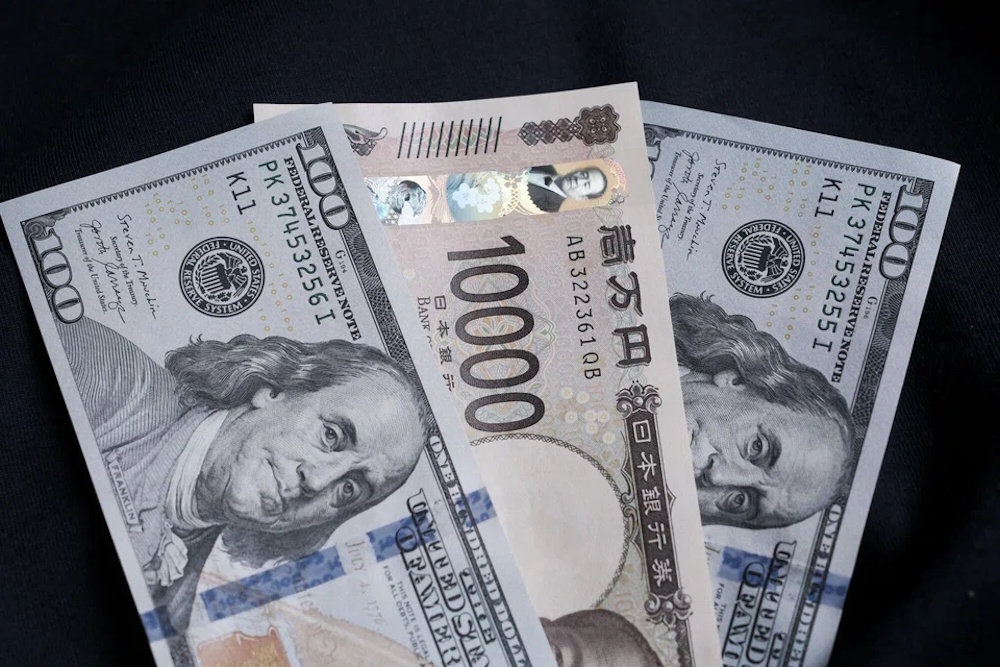
The USD/JPY pair is currently positioned slightly below the 153.00 mark following a significant four-day decline that has wiped out a substantial portion of January’s advancements. Spot has declined approximately 2.7% this week, settling around ¥152.8–¥153.0, following a volatile intraday range that fluctuated between the high-152s and high-154s. This movement was influenced by stronger-than-anticipated U.S. jobs data, which momentarily drove the pair toward the high-154s before resistance limited the advance. Earlier in the month, the price reached a year-to-date high near ¥159.45 before declining toward the ¥152.10 level, which marks the current low for 2026 as of January 27. The rebound to approximately ¥153.00 represents a consolidation phase within a distinctly negative weekly framework, rather than indicating a confirmed reversal. The decisive win of Prime Minister Sanae Takaichi has shifted the market’s perspective on Japan’s policy framework. In the past, numerous market participants anticipated a prolonged “easy yen” environment, expecting significant fiscal expansion and ongoing pressure on the Bank of Japan to maintain an ultra-dovish stance, which would keep USD/JPY high as a funding currency pair. The prevailing narrative is currently undergoing a process of deconstruction. The election result is perceived as beneficial for domestic demand while also indicating a more fiscally responsible approach than previously anticipated, thereby diminishing the rationale for confining Japan to a state of enduring negative real yields. As that conviction diminishes, so does the confidence in maintaining structurally short yen positions, particularly following the BoJ’s recent rate hike and its indication of a readiness to further normalize policy.
The Bank of Japan has transitioned from strict yield-curve control to a more traditional approach focused on short-term rates, allowing long-term yields to adjust gradually. Since March 2024, the approach has concentrated on the overnight rate alongside a gradual decrease in JGB purchases, with intentions to reduce monthly buying by approximately ¥400 billion each quarter as circumstances permit. Increasing yields on Japanese Government Bonds and the potential for further rate hikes in 2026 indicate that rate differentials are no longer exclusively favoring the U.S. dollar. This scenario is precisely where a pair positioned around ¥159 in mid-January could swiftly decline toward the low-150s if confidence in the existing regime falters. The recent decline beneath 153.00 illustrates the evolving expectations more than any individual news item. On the U.S. side, labor data have shown stability, yet they lack the strength needed to bolster USD/JPY. In January, nonfarm payrolls increased by approximately 130,000, surpassing the consensus estimate of around 70,000. Meanwhile, the unemployment rate decreased to 4.3%, down from 4.4%. Weekly initial jobless claims decreased to approximately 227,000, which is marginally higher than the anticipated 222,000, while continuing claims rose to around 1.862 million from the previous 1.841 million. The U.S. Dollar Index is currently positioned just below 97, approaching two-week lows, as market expectations lean towards approximately 50 basis points of Federal Reserve easing by the end of the year, rather than an extended period of stability. The recent jobs report led to a brief surge in the dollar, pushing USD/JPY into the high-154s. However, this strength was short-lived, highlighting the pair’s sensitivity to fluctuations in U.S. real yields. With CPI set to be released on Friday and the Federal Reserve facing political pressure regarding the speed of cuts, the potential for strength in the dollar leg appears tenuous.
Research desks are now openly scrutinizing the foundational assumptions of the “Takaichi trade.” Upon her initial assumption of party leadership, USD/JPY experienced a gap from approximately 147.70 to over 149.00, subsequently rallying consistently into the 159s as market participants anticipated her commitment to maintaining ultra-easy BoJ policies and ensuring yen funding remained appealing. The validity of that thesis has diminished. BoJ Governor Ueda maintains a hawkish stance, with the balance sheet gradually contracting, and the long end of the curve permitted to increase. In this context, Rabobank upholds a 12-month projection for USD/JPY at 145, suggesting additional yen strengthening from present levels. A shift from approximately 153.00 today to 145.00 over the course of a year would indicate a decline of about 5% in the pair, aligning well with a scenario where the BoJ implements gradual rate increases while the Fed is reducing rates. Japanese authorities are once more indicating unease with swift changes. Leading currency officials have emphasized their position of being “on high alert” regarding excessive volatility and are maintaining close communication with their U.S. counterparts. The significance of that rhetoric is evident, especially with USD/JPY remaining close to the upper-150s, a level where previous interventions were anticipated. The present range of 153–155 represents an ambiguous area: it hasn’t reached the extreme levels of the previous spike, yet it is sufficiently near that a further movement towards the mid-150s could prompt tangible responses instead of mere rhetoric. The recent fluctuations between the high-152s and high-154s, exacerbated by low liquidity during a Tokyo holiday, illustrate the rapid overshooting of prices when order books are thin. Short-dated options indicate a heightened risk environment, as there is growing demand for downside yen hedges. Additionally, risk reversals are leaning towards dollar calls at elevated strikes, accompanied by richer premiums, which aligns with concerns over potential interventions.
Currently, USD/JPY is experiencing a corrective downswing following its peak around ¥159.45 on January 14. The price has retraced below 153.00 and is currently positioned just above the 200-day exponential moving average, approximately at ¥152.50. The upward trend of the moving average remains intact; however, the pair’s position above it for a fourth consecutive day of decline raises a cautionary flag. Situated beneath the 200-day line, the subsequent critical zone is the 38.2% retracement of the rally from 140.02 to 159.35, concentrated around ¥152.00 to ¥151.95. The year-to-date low, positioned just above at approximately ¥152.10, has become a significant pivot point. A daily close beneath the ¥152.10–¥152.00 range would validate that the 159.45 area was a significant peak, rather than merely a temporary halt, and would bring the 50% retracement near ¥149.68 into focus. The short-term outlook for USD/JPY is defined yet constrained. On the downside, initial support is positioned around the 153.00 level, which currently serves more as intraday congestion rather than providing substantial protection. Below that, the ¥152.10 area serves as a critical support level established on January 27, further supported by the adjacent 38.2% Fibonacci retracement near ¥152.00. At a deeper level, ¥150.85 represents the 61.8% retracement of the advance from September to January, coinciding with psychological demand near the ¥150.00 round number. On the topside, resistance is established at ¥154.00, where repeated congestion has limited rebounds, followed by a higher break level near ¥155.00. A sustained close above 154.00 would alleviate immediate downside pressure and may trigger a move back toward 155.00. However, while the pair remains below that range, the prevailing trend continues to point downward.
The alignment of momentum indicators suggests a bearish price structure. On the daily chart, the MACD is positioned below its signal line and remains under zero, with the negative histogram showing signs of expansion. The current configuration indicates an increase in downside pressure instead of a fully developed selloff. The relative strength index is currently positioned at approximately 36 and continues to decline, remaining in neutral-to-bearish territory without entering the deeply oversold range just yet. The current combination typically suggests caution against pursuing the downward trend aggressively at this moment, yet it distinctly supports the strategy of selling on strength rather than purchasing on dips. Until the MACD stabilizes and the RSI ceases its decline, efforts to recover and maintain levels above 153.00–154.00 are expected to falter, and any rebounds into resistance zones appear susceptible.